
Today on Medieval Monday, we’re going on an expedition back in time to the year of 1066 and beyond when in October 1066 William the Conqueror from Normandy successfully invaded England took the crown – forever changing history.
Most of us remember the date 1066 from history class because it was such a foundational year in British and European history.
But what actually happened and why is it important.
We could do an entire course on the events leading up to and the aftermath of 1066 but here are the basics.
- England had been a mix of natives and tribes (Angles and Saxons) since the era of the Roman conquest. Britain was unified by powerful Anglo-Saxon King AEthestan in 927 AD. His descendants were early monarchs of a united Britain.
- During the early Middle Ages, after the Roman occupation (43 AD-410 AD), England was constantly being attacked by violent Viking tribes who destroyed monasteries in their raids. Some Vikings make permanent settlements but that was much later on.
- A group of Vikings at one point decide to settle down in French Normandy and become ‘normanized’ – like The French – speaking their language at court and being civilized, versus their marauding ancestors – from here get the genealogy and heritage of William the Norman – who would become William the Conqueror
How did William get from Normandy to England?
- In 1064, King of England, Edward the Confessor realized he was going to die childless. He asked his brother in law- Harold Godwinson to travel to Normandy to offer his relation William of Normandy the heirdom to the English throne upon his death.
- While Harold initially did follow Edward’s order, informing William of Edward’s wish that William become king, when Edward died, Harold instead crowned himself as monarch.
- This was a real life Game of Thrones with each side having some legitimate claims to the throne. The death of Edward without an heir led to a war of succession. Read more about the history here
- William was not willing to give up his claim to the English throne and in September 1066, he set sail with several hundred ships; 7,000 men and 2,000 horses on board. They landed at the small port of Pevensey in Sussex and the Normans made their way towards Hastings, where they take up their positions.
- It was on that fateful night on October 1066, that the battle for England began to rage between Norman and Anglo-Saxon troops.
- It was an intense and bloody battle, but in the end William was triumphant. He is the last foreigner to successful conqueror England (over sea, land, air) since. Harold died in the battle.
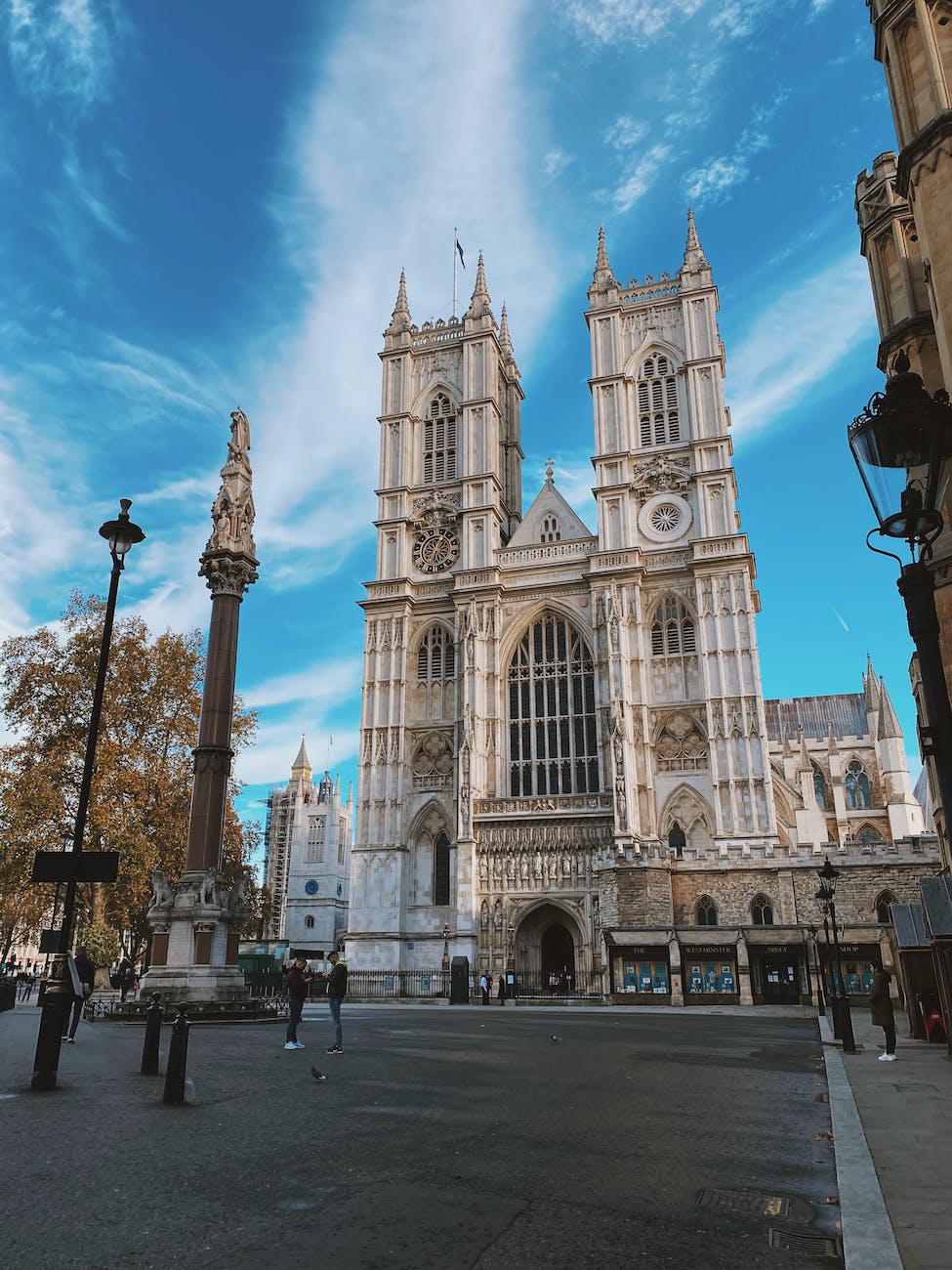
- William is then crowned king of England on Christmas Day 1066 at Westminster Abbey – a church which was initially built by Edward the Confessor. You can still visit this glorious church in London today. Learn more here.
Why this matters?
William established a hereditary monarchy that is unbroken in England to this day (although there have been some introductions from German, French and other relations over the years – The Windsor Family still can trace their lineage back to William the Conqueror)
William ensured the unification of England and his heirs like Henry II began to codify the law.
The biggest shift is the fate of the English language – as at the time the early English language was a mix of native dialects and Germanic roots. The Normans spoke French and for many years French was the main language of court and the government. This is why so much of the English vocabulary traces its roots back to Latin and Romance Languages – The Norman influence.
Tell me about this Tapestry?

The Bayeux Tapestry, is currently on view in Bayeux France in a wonderful museum, is a treasure of Medieval Art and history. It is one of the most important pieces of historical art from The Middle Ages.
- The Bayeux Tapestry was commissioned in 1077 by Bishop Odo, William the Conqueror’s half-brother, to embellish his newly built cathedral in Bayeux (present day France)
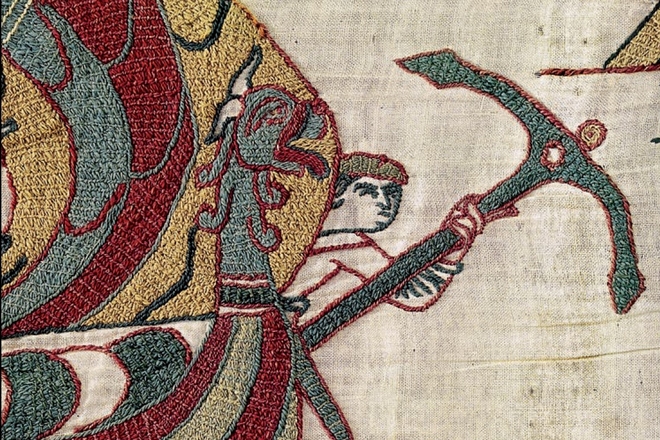
- The Bayeux Tapestry was hand made embroidery that tells the story in detail of the vents surrounding the conquest of England by William, Duke of Normandy. It includes details from Edward the Confessor’s offer of the throne to William to the invasion and battle and the vindication of William.
- It has many elements from the Norman and their Viking heritage to move the narrative pictorially.
- The Tapestry is a Romanesque style and is a living view into the life and history of The Middle Ages and artistic interpretation at the time.
- The tapestry is over 224 feet in length and can be viewed at the museum. It is amazing that after all this time only a few fragments are missing.
- While the saga and story read like a movie on tapestry – each scene moving the plot along, what is even more striking is the historical representation of real life costume and weaponry:
- It provides info about civil and military architecture such as castle mounds, armor consisting of nasal helmet, oblong shields and Viking seafaring images
- There are animals (real and mythical) from lions to deer as well as griffins and centaurs
- Even a tale from Aesop’s fable of the Fox and the Crow is represented.
How was it made:
While it is described as a tapestry, it is in fact an embroidery that demanded skilled workers to create. The artistry is unrivaled in other pieces from its time. Legend has it that Queen Matilda and her ladies made it, but more likely it was professional embroiders who were commissioned by Bishop Odo.
- It is 224 feet long and 20 inches wide
- The embroidery consists of pictures and text inscriptions and comprises nine panels of linen cloth together
- 10 colors of wool thread were used
- 9 panels of linen cloth
How to Visit:
You can tour the amazing Bayeux Museum Complex in Bayeux France, or if you can’t make the journey discover each panel and details about the history on their website.
 Art Expeditions