Follow Art Expeditions on Facebook
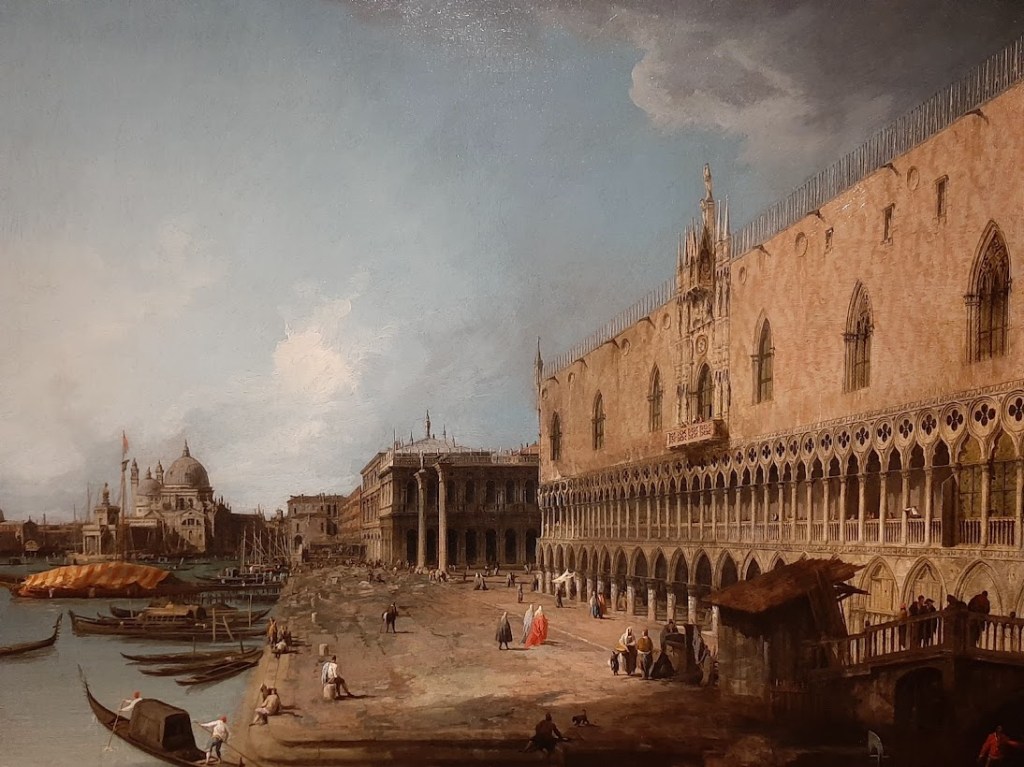
Today we are transitioning from the High Venetian Renaissance into the 18th-century where a mix of artistic styles from ‘View Paintings’ of Canaletto to the Baroque and Roccoco merge into gracious and opulent Venetian art.
With the advent of trade in the ‘New World,’ continued to grow with the colonization of the Americas, Venice lost its near stranglehold on trade with the Near Eastern and Asia. While Venice continued to be a sea power, by the 1700s (18th Century), it’s glory days as the main trade empire of the sea were dwindling.
Venice realized their time as The Queen of the Adriatic trade were over, but they had made enough wealth to last the next 100 years so why not enjoy life a bit. While many would city-states would fear their future, Venice embraced its past and invested heavily in architectural projects, art and the thrills of carnival season.
In spite of the economic downturn from decreased trade, Venice began to forge a new economy on tourism, which interestingly enough is still a backbone of the Venetian economy.
Venice’s lore of being a beautiful city in the sea, with its fabled architecture, romantic charm, exqusitive views drew many tourists from England and even the Americas on their ‘Grand Tour’ of Europe. Venice was arguably the most popular destination on The Grand Tour as it’s history and unique setting were unlike anything else in Europe.
It was in this tourism niche, that masters of Eighteenth Century Venetian Art emerged – like Canaletto, Bellotto and Guardi. Tourists would purchase these ‘view paintings,’ as memorabilia of their trip. Much as might purchase a piece of artwork (print) from a street artist in New York or a book of postcards…
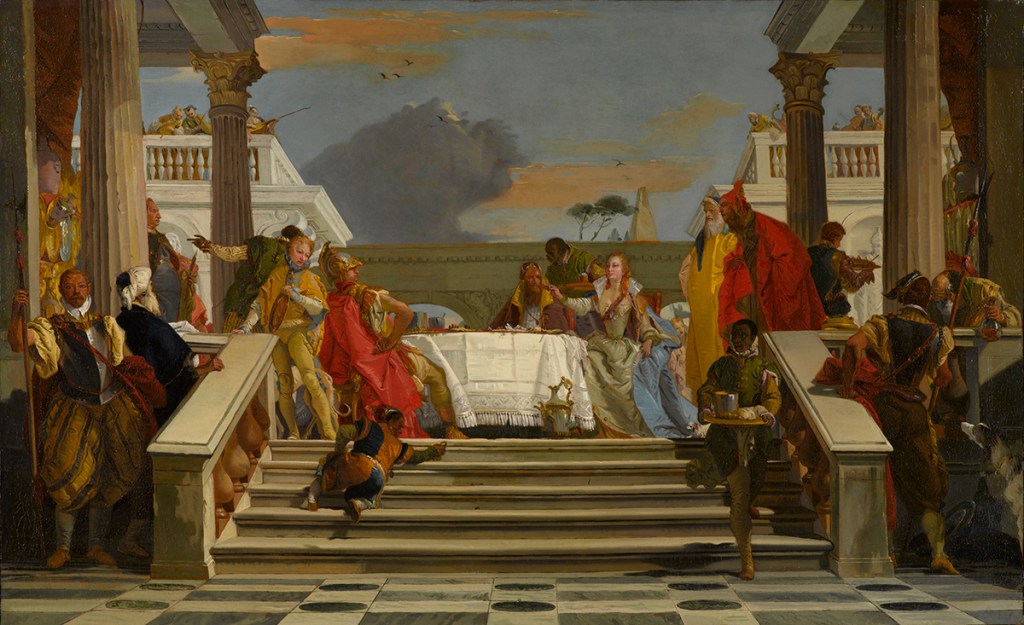
Outside of Venice, 18th-Century Europe was mostly enraptured by a style of art called Rococo, which is dainty, light-hearted, sugary sweet and highly decorative. Rococo style was particularly popular in France and Germany. In Italy, Venice was the main city to embrace The Rococo style, which makes sense given the amount of artistic exchange Venetian artists had with travelers to and from the city. Venice is close to Austrian border(then part of Holy Roman Empire) and France (over The Alps); add in Rococo has a kind of laissez faire sweet and anything goes mindset that is not concerned with dark or heavy subjects it would fit well with the 18th-century Venetian mindset.
That being said, while artists like Tiepolo became master in the Rococo Venetian Style, others like Canaletto and the ‘view painters’ created their own perspective in paint. Canaletto can easily be identifed for his rich colors and extremely detailed scenes of Venice – a view painting as a perfect capture of Venice in the 1700s.
In the next several posts we’ll meet a few of the 18th-century Masters and their unique perspectives in paint.
What is Rococo?
A period of art that emerged in the 18th-century after the High Renaissance and shift to Mannerism and Baroque periods.
- Baroque was known for it’s opulent and serious style that was ornate an over the top (architecture); Baroque paintings were meant to evoke emotion and draw the viewer into the drama of the painting. Arguably the most famous Baroque painter is Caravaggio who was known for his use of light and dark and deeply riveting and dramatic scene. Baroque art is famous for use of chiaroscuro -intense contrast between light and dark with light coming from a specific point.
- Baroque was a sharp divergence from the serene and focused compositions of the Renaissance…
- Baroque was the popular style of Louis XIV in his Palace of Versailles…while the plalace has drama and is ornate, The Rococo movement felt Versailles had a soulessness to it.
- Rococo began as a response atainst the serious Baroque of Versailles. Rococo remains detailed and ornate but is meant to be light frivolous and whimsical. ‘not so serious’
What’s in a name: The term Rococo was first used by Jean Mondon in his Premier Livre de forme rocquaille et cartel (First book of Rococo Form and Setting) in 1736). The term was derived from the French rcaille, which means ‘shell work, pebble-work’ that describe High Renaissance foundations or garden grottos that used seashells and pebbles, embedded in stucco. This elaborate effect had a similar whimsy to the Rococo decorative effects.
- Rococo art and architecture are defined by their theatricality and drama and were influened by stage designed.
- Rococo moved away from chiaroscuro and moved to light pastels, gilding, motifs and scrollwork as well as tromp l’oeil.
- Most Rococo paintings are bold in pursuit of the joyous “lust for life” with genre paintings themed around: hedonism, Arcadian landscapes, allegorical portraits and characters.
- It originated in France with Fragonard and Boucher being leading French Rococo masters.
- In Venice, The Tiepolo Family, starting with Giovanni Battista Tiepolo created some of the most colorful and luminous Rococo paintings.
What is a View Painting: A view painting is a genre of landscape painting that became popular in Venice in the 18th -century as tourists from all over Europe and even America took visited Venice on ‘Their Grand Tour’ – Works by Canaletto and others became popular keepsakes for travelers.
Don’t forget to SUBSCRIBE to Art Expeditions for updates as we continue our exploration of Venetian Art and beyond.
Resources:
 Art Expeditions