
This Impressionism Friday, I’m excited to discuss Gustave Caillebotte, one of the most important artists to emerge from The Impressionism Movement.
I fell in love with Caillebotte’s fusion of Realism and Impressionism while studyingat Belmont University in Nashville. My art history professor discussed Caillebotte’s famed Paris Street, Rainy Day at length, focusing on the multiple points of perspective as the bustling streets converge…you feel as though you are right there in the scene. The water on the pavement looks as though it will drip off the canvas.
Umbrellas are personally hard for me to paint as an artist because it has such a distinctive shape and yet can feel stagnant if not done properly. Caillebotte’s Rainy Day feels as close to a photo as you can, while still capturing a moodiness of Impressionism in the rain.
I always enjoyed Paris Street, Rainy Day – but when you see it in person it awes you. It is a fairly large painting, positioned (on my visit) near an entrance in the Impressionism Wing at The Art Institute of Chicago where you feel as though when you turn that corner you are walking into the painting.
Biography:
Born on August 19, 1848 in the rue du Faubourg-Saint-Denis to an upper class Parisian Family, Caillebotte began painting and drawing as a hobby while his family summered in the river town of Yerres (12 miles south of Paris) in the 1860s.
Caillebotte attended law school and also practiced engineering before being drafted into the Franco-Prussian War. He served from July 1870 to March 1871 in the Garde Nationale Mobile de la Seine.
After the war, Caillebotte decided to focus on his passion for art. He began studying in the studio of painter Leon Bonnat.
Caillebotte had a natural talent for art that allowed him to quickly progress to a masterful style. He briefly entered the prestigious Ecole des Beaux-Arts in 1873, but only stayed shortly. With his father’s death, Caillebotte had a large inheritance and could focus on his own artistic style without pressure.
Around 1874, he befriended several important artists in the Impressionism scene including Edgar Degas and Italian Impressionist Giuseppe de Nittis.
- Art Expeditions will do a ‘Get to Know’ segment with de Nittis soon. I discovered his art during a special exhibit at The Phillips Gallery in DC, which featured 70 works by de Nittis, Degas, Manet and Caillebotte
In 1874, Caillebotte attended, but did not participate in the first Impressionist exhibition of 1874 (at the time called ‘Independents)…Caillebotte made his deubt in the second Impressionist exhibition in 1876 with The Floor Scrapers. The masterpiece is in the Musee d’Orsay in Paris. He also did a second and more realistic version the painting as well to showcase his range as an artist.
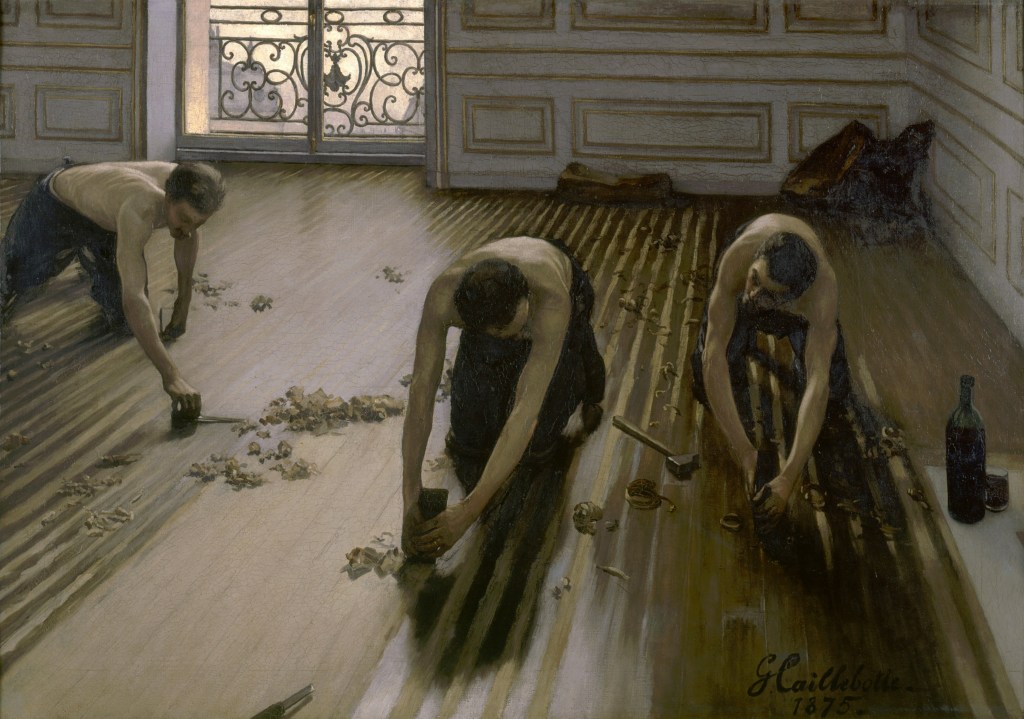
Though Caillebotte exhibited with The Impressionists, he, like Degas and Manet were focused on painting reality as they saw it and didn’t fully ascribe to Impressionism or Realism, which makes his body of work versatile.
In 1881, he purchased a property at Petit-Gennevilliers on the banks fo the Seine near Argenteuil. He moved there permanently, where he limited his time painting and instead focused on gardening and building and racing yachts.
In his country estate he often hosted his brother, Martial and good friend Renoir, where they enjoyed discussions on art, literature and philosophy.
- Fun fact: Caillebotte was a model for Renoir’s famed 1881 painting, Luncheon of the Boating Party (at The Phillips Collection in DC)
In his lifetime, Caillebotte was known as an art collector more than a painter, but this shifted after his death and art historians reexamined his masterful works.
As an art collector, he supported Claude Monet and was active in convincing the French state to purchase Edouard Manet’s 1863 Olympia.
When Caillebotte died at the age of only 45, he left a massive art collection, which wanted to deed for public display in the Luxembourg Palace (for living artists) and then in the Louvre.
At the time, artists like Pissarro, Monet, Renoir, Sisley, Degas and Cezanne were valued by still nt full accepted by the establishment.
Renoir actually negotiated with the French government under with they took thirty-eight of the paintings to The Luxembourg Palace.
This became the first display at a public (state-owned) venue in France.
The remaining paintings in the collection were refused several times by the French government, until 1928 when the French government wanted the paintings. The remaining works however were not longer deeded to France and a few ended up other places like the Barnes Foundation (Bathers at Rest), now in Philadephia.
40 of his works are in the Musee d’Orsay in Paris.
Caillebotte was a fascinating person who had a passion for art, but also wasn’t afraid to enjoy other pursuits and he was blessed with the acumen and funds to do so.
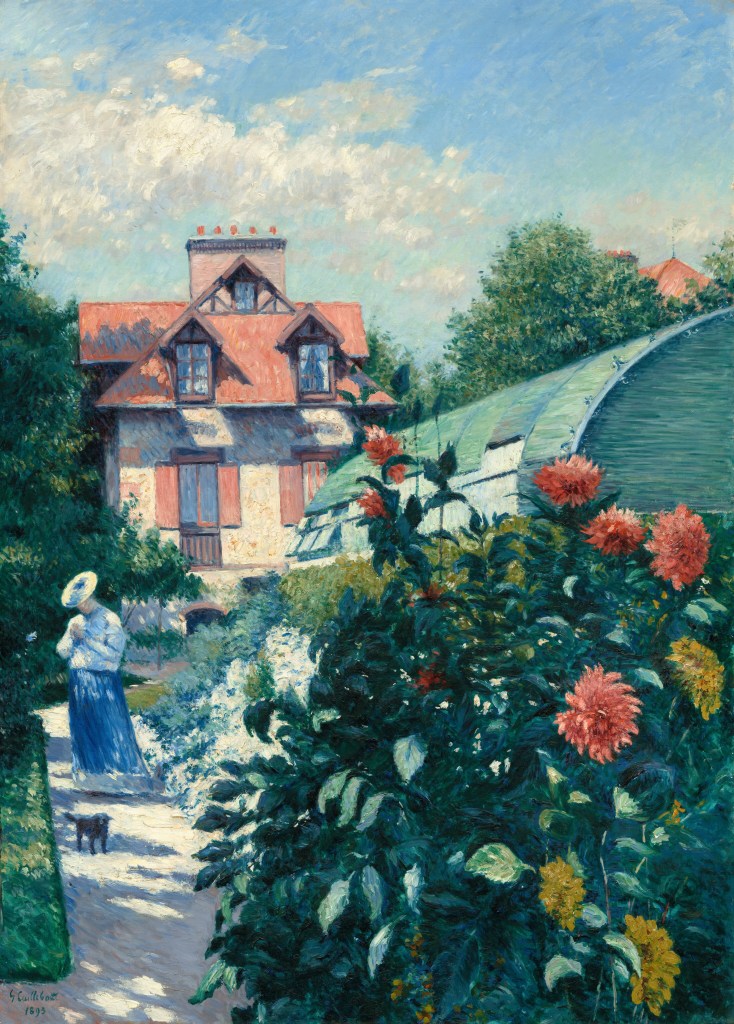
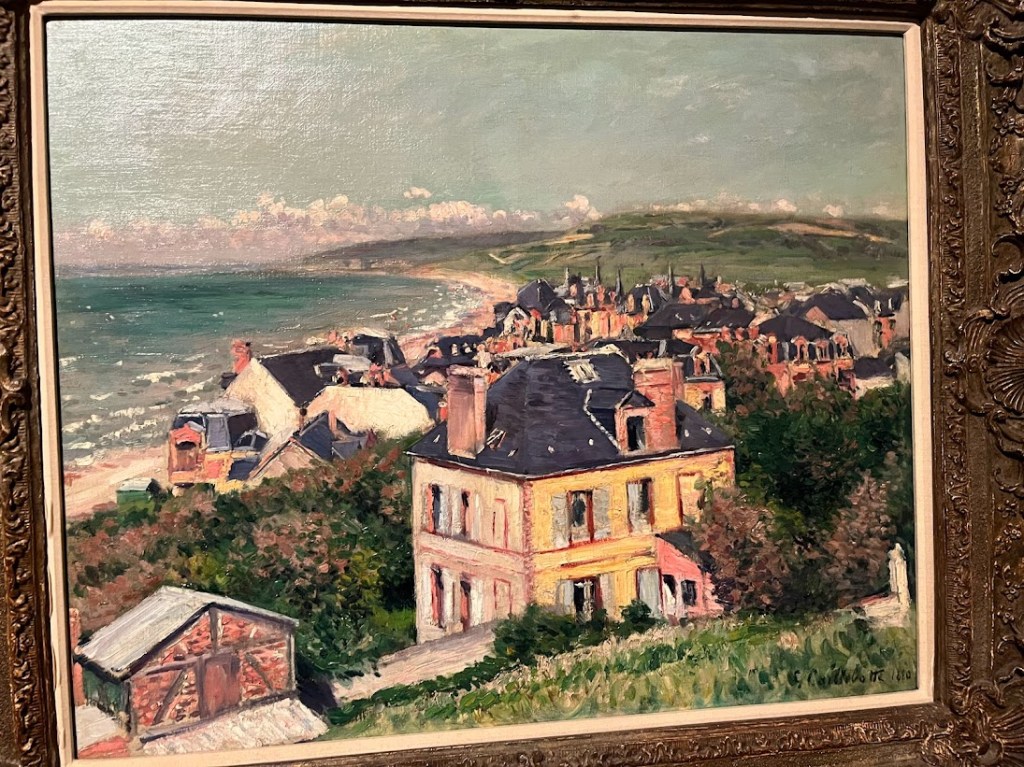
I’ll live you wih a few of my favorite Caillebotte paintings:
 Art Expeditions