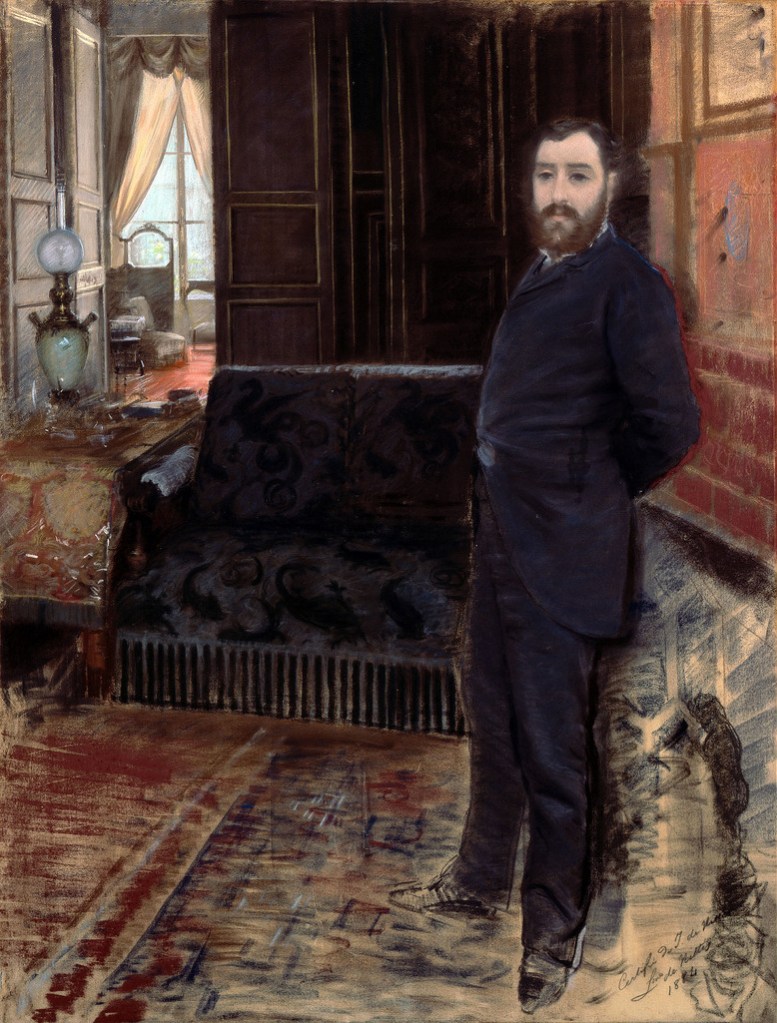
Today on Impressionism Friday we are going to meet one of Italy’s greatest Impressionists Giuseppe De Nittis.
I was unfamilar with DeNittis work until I discovered him at a special exhibit at The Phillip’s Collection in Washington DC
The Phillip’s Collection was the first modern art museum in America and is tucked away in the Dupont Circle neighborhood of DC. It has a treasure trove of works by Degas to Caillebotte, Renoir to Monet and beyond.
This exhibit brought in over 70 works by Italian Impressionist De Nittis along with several pieces by his colleagues Caillebotte, Degas and Manet – who De Nittis painted with often in Paris.
De Nittis’s ability with color and moody skies and gorgeous pastoral scenes with rain, light, smoke and clouds. He quickly became on of my favorite artists and an inspiration for artistic technique in my own artwork.
Biography:
De Nittis was born in Barletta, in the region of Apulia. His father, Raffaele was a wealthy landowner who sent this son to study under Giovanni Battista Calo, who also tutored other important painters from Bartletta including Vincenzo De Stefano, Giuseppe Gabbiani and Raffaele Girondi.
During this time The Bourbon Monarchy was in charge of Barletta, which Raffaele publically spoke out in position. Ferdinand II (Bourbon) was known to be harsh and nicknamed ‘the Bomb King’ for having his own subjects cannonaded. Unfortunately Raffaele’s opinions led to his arrest and impresonment for two years.
During this time Giuseppe was still able to gain admittance to the Reale Insituto di Belle Arti, a university-level art school in Naples.
However Giuseppe, like his father, was free to speak his mind (even if he was right, this was frowned up) and let to his expulison from the Institute in 1863 for insubordination.
After his expulsion, undeterred, De Nittis showed two of his works at an exhibition at the 1864 Neapolitan Promotrice.
In 1867, he moved to Paris for a brief time, where he met and began working with the art dealer Adolphe Goupil.
Goupil recommended that De Nittis focus on genre works, which would easily sell in the market.
He then returned to Italy and began to paint from nature, including several views of Vesuvius.
- A talk about the Phillip’s exhibit – Curator Renato Miracco mention the ardorous trip and effort De Nittis made to paint the Vesuvius works – you can listen to the entire lecture here.
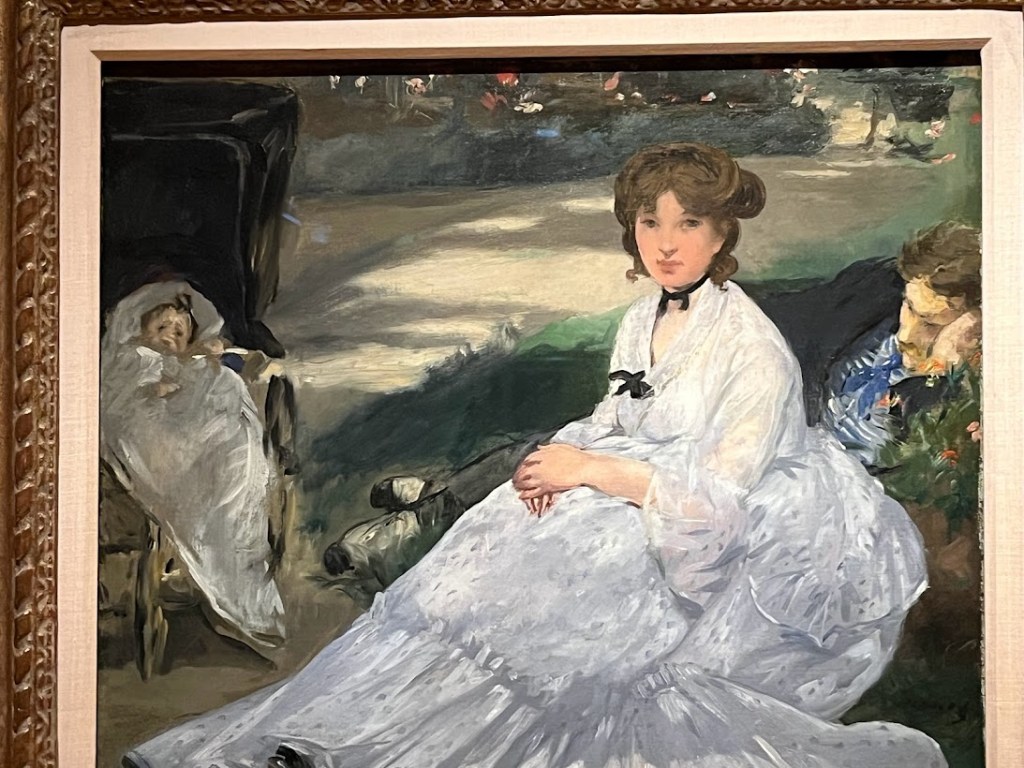
In 1870, Manet spend three months with De Nittis and his wife, Leontine, at their country house. To thank the couple for their hospitality, Manet gave the couple one of his first plein air paintings, ‘In the Garden.’ (Now at Shelburne Museum, Vermont). The painting is of Berthe Morisot’s sister (Berthe was married to Manet’s brother) who visited Manet during his stay with De Nittis.
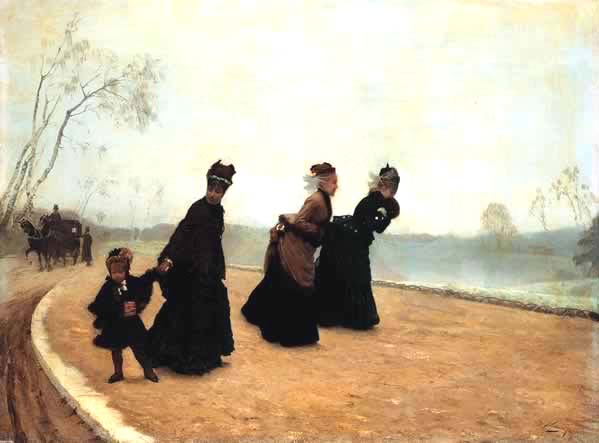
In 1872, he returned to Paris and ended his contract with Coupil. In 1874, his work Che fredoo! (It’s So Cold) achieved success in the Salon; Later that year he also was asked to participate in the first Impressionist exhibition by his friend Edgar Degas. De Nittis was unfortunately not fully accepted in the Impressionist circle and did not particpate in their subsequent exhibitions…However he did continue to focus on Impressionism throughout his career.
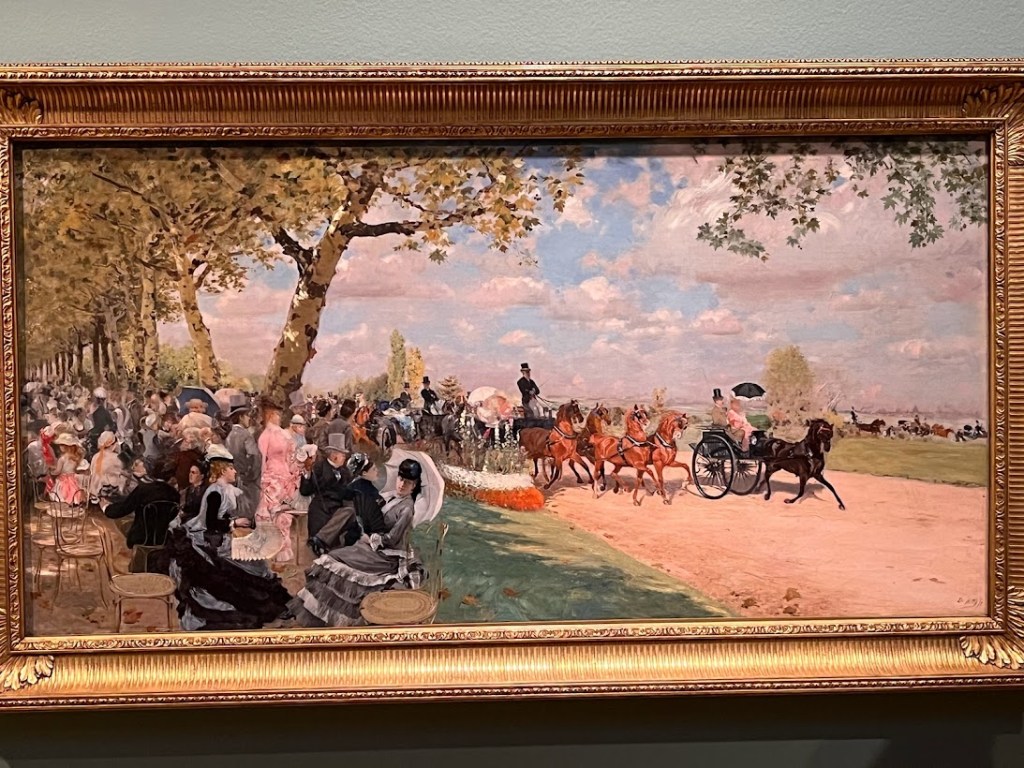
De Nittis and Degas became quick friends and often painted together – The Phillip’s exhibition showed how Degas and De Nittis would go to the races and paint horses. These had a deeper realism than the landscapes on display.
- Fun fact: Degas’s grandfather living in Naples, so Degas and De Nittis would share a commonality with that region. Degas was French, but his ancestors were both French-Creole (Louisiana) and Neapolitian as well.
- Degas painted De Nittis family on several occasions including Mme. De Nittis in the Portland Art Museum.
- Degas is believed to have had 25 De Nittis paintings
He was close with Caillebotte…De Nittis and Caillebotte painted together as De Nittis became a mentor. They are often dubbed ‘Human Impressionists’ for the realism of their city scapes.
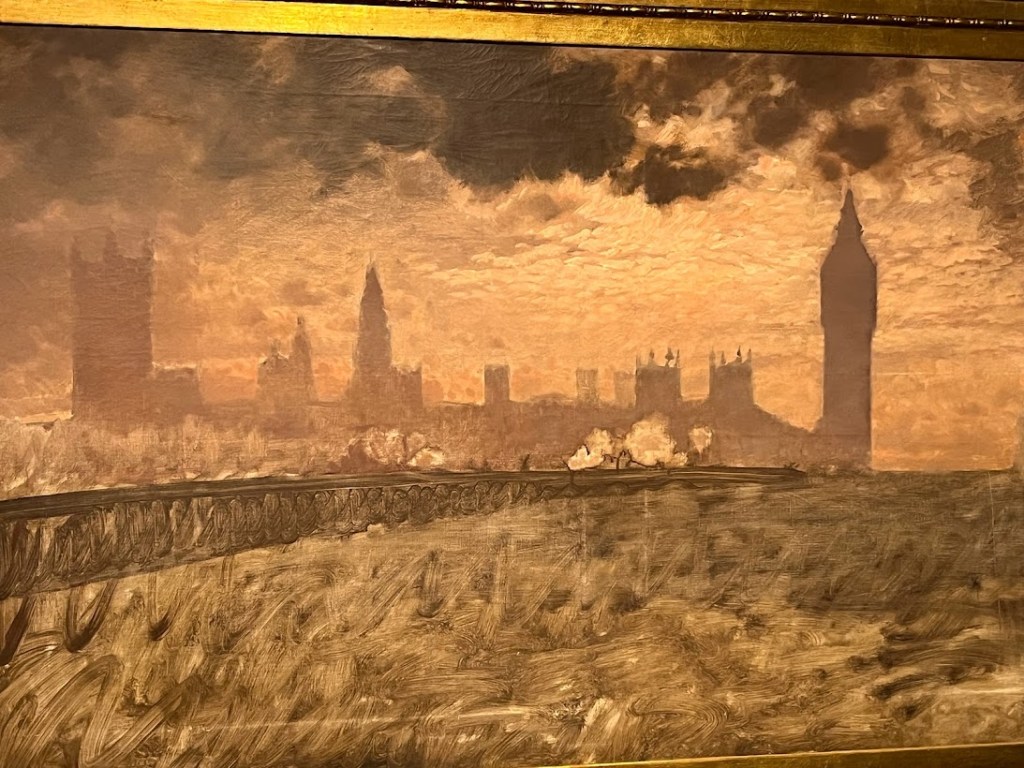
One painting from De Nittis’s time in London was seen by Van Gogh who mentioned it in a letter to his brother Theo applauding De Nittis’s ability to capture the mood of London (paraphrased) Read more here.
De Nittis began to test the waters with pastels in 1875, creating pastel portraits of sitters like Zola, Manet and Duranty.
In his personal life, De Nittis married Leontine Gruvelle De Nittis (married in 1869) had several children.
Sadly De Nittis died at the age of 38 from a sudden stroke. His wife Leontine donated many of his paintings to his hometown of Barletta, where they are now gathered in the Pinacoteca De Nittis in the Palace of the Marra. Many of these works were featured in The Phillip’s exhibtion.
His works can also be found in The Musee d’Orsay in Paris, The British Museum in London, The Met and Philadelphia museum of art.
 Art Expeditions