
The North Carolina Museum of Art in Raleigh is currently hosting a captivating exhibit, “Venice and the Ottoman Empire,” which runs through January 5, 2025. Organized by the Fondazione Musei Civici di Venezia (The Venetian Civic Museums) and Museum Box, this groundbreaking exhibition delves into the intricate cultural and historical ties between two of the most influential empires of the East and West.
A Visual Feast
Featuring over 190 diverse works of art, from the 15th to the 18th centuries, the exhibit offers a visual feast. Renowned Venetian artists like Gentile Bellini and Vittore Carpaccio are represented alongside luxurious Ottoman textiles, armor, and printed books. More than half of the exhibited works are on loan from Venice’s civic museums, making this a rare opportunity to experience these masterpieces firsthand.
This exhibit invites you to travel through time and culture, stepping into the rich history and cultural exchange of these two rival empires.
If you think art history is boring, I challenge you to spend an hour at this exhibit. You’ll discover art history is more action packed than an episode of Game of Thrones; a real-life soap opera, complete with royal scandals, political intrigue, and artistic rivalries.”

Venice: A Brief History
If you have followed Art Expeditions for the past year or so, you know that I have a passion for Venetian art and culture. I dedicated a series of blog posts on the history of Venetian Art, from the founding of Venice to the modern age (you can find them here).
To fully appreciate the “Venice and the Ottoman Empire” exhibit, it’s helpful to understand the unique history of Venice. Venice’s strategic location on the Adriatic Sea made it a vital trading hub between East and West. This position allowed the city-state to flourish, becoming one of the most powerful maritime republics in history.
According to legend Venice was founded on the Feast of the Annunciation of the Virgin Mary on March 25, 421, by those fleeing the Barbarian invasions. The first settlement in Venice was in the Rialto Bridge area, which remains an epicenter of Venetian life today.
Born from adversity, Venice emerged as a refuge for Romans fleeing barbarian invasions in the 5th century AD. The marshy lagoons offered protection, but survival required ingenuity. Luckily the Venetians never lacked for engineering savvy.
Venetians devised a unique system of taking wooden piles and driving them into the marshy ground to create stable foundations for their city. Platforms were then built on top of the piles, laying the foundation for buildings. With no fresh groundwater, The Venetians created a series of vats for collecting rainwater, they also created canals and built bridges to connect 118 small islands.
A testament to human ingenuity, Venice transformed from a mosquito-ridden marsh into one of history’s greatest empires.
Venice: The Fall of Western Roman Empire and Beyond…
As the Western Roman Empire crumbled in the 5th century, Venice emerged as a fortified outpost. Its strategic location in the marshy lagoons provided protection from barbarian invaders.
It’s important to note that while the Western Roman Empire fell in 476 AD, the Eastern Roman Empire (Byzantine Empire) persisted until the 15th century, when it succumbed to the Ottoman invasion in 1458.
Venice’s early history is deeply intertwined with Byzantium, evident in its architecture, art, and culture. The stunning mosaics of St. Mark’s Basilica are a testament to this Byzantine influence.
By the 9th century, Venice had established itself as an independent republic, governed by a Doge and a Council. Known as “La Serenissima,” or “The Most Serene Republic,” Venice enjoyed centuries of power, stability, and cultural splendor. This golden age lasted until Napoleon’s conquest in 1797.
Venice, Byzantium and The Ottoman Empire:
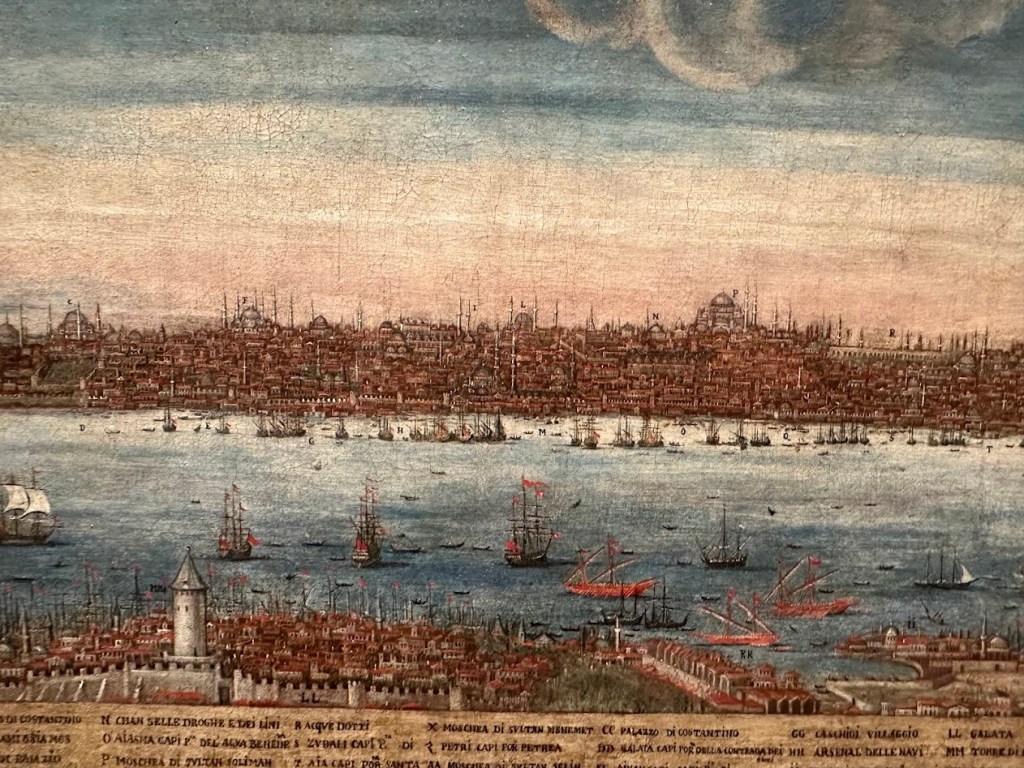
Venice and Constantinople, though geographically distant, shared a complex and often tumultuous relationship. Initially, Venice looked to the Byzantine Empire for guidance and protection following the fall of the Western Roman Empire. However, as Venice grew in power, it also sought to establish its own independent identity.
Constantinople, founded by Constantine the Great, was the capital of the Eastern Roman Empire. Its strategic location made it a vital center of trade and culture.
To understand the Ottoman Empire’s conquest of Constantinople and the subsequent end of the Eastern Roman Empire, we must examine the events that led to the decline of Byzantine power.
After gaining independence, Venice continued to engage in trade and cultural exchange with Byzantium. Many Venetians lived in Constantinople, contributing to a vibrant and integrated society.
This peaceful coexistence evaporated in 1182, when Byzantine Emperor Andronikos I ordered that the city’s over 60,000 Roman Catholic inhabitants known as ‘Latins’ be hunted down and massacred. Those who were not killed, were forced to flee or sold into slavery.
*The Venetians were members of the Roman Catholic Church (Latin-Western) and Constantinople were members of the Orthodox Church (Eastern). While both Christians, prejudices from the Orthodox began to target the ‘Latins’ in 1182. This prejudice had less to do with religion than jealousy about trade and economic reasons.
This act of brutality severed any trust between Venice and Constantinople and while they formally accepted a peace treaty, the desire for revenge continued to burn deep. This event ignited a deep-seated desire for revenge in Venice, setting the stage for the Sack of Constantinople in 1204.
The Sack of Constantinople
From April 12 to 15, 1204, a tragic event unfolded as Crusaders, originally bound for Jerusalem, diverted their course to Constantinople. Instead of fulfilling their religious mission, they launched a brutal attack on the city, plundering its immense wealth and cultural treasures. This devastating act was fueled by financial difficulties and lingering resentment over the 1182 Massacre of the Latins.
The sack of Constantinople had far-reaching consequences. Countless priceless artifacts were looted and destroyed, and thousands of innocent civilians were killed. The city’s cultural and economic vitality was severely undermined, leaving it vulnerable to future attacks.
Among the stolen treasures seized by Venice, were the iconic bronze horses of the Hippodrome, which were mounted on the Basilica of San Marco for several hundred years, until Napoleon briefly stole them in 1799. The horses are now safely housed in the basilica’s museum.
The sack of Constantinople weakened the Byzantine Empire significantly, making it an easier target for the Ottoman Turks. The eventual Ottoman conquest of Constantinople in 1453 marked the end of the Byzantine Empire.
Sources: https://www.britannica.com/event/Sack-of-Constantinople-1204

About Francesco Morosini:

Venice and The Ottoman Empire:
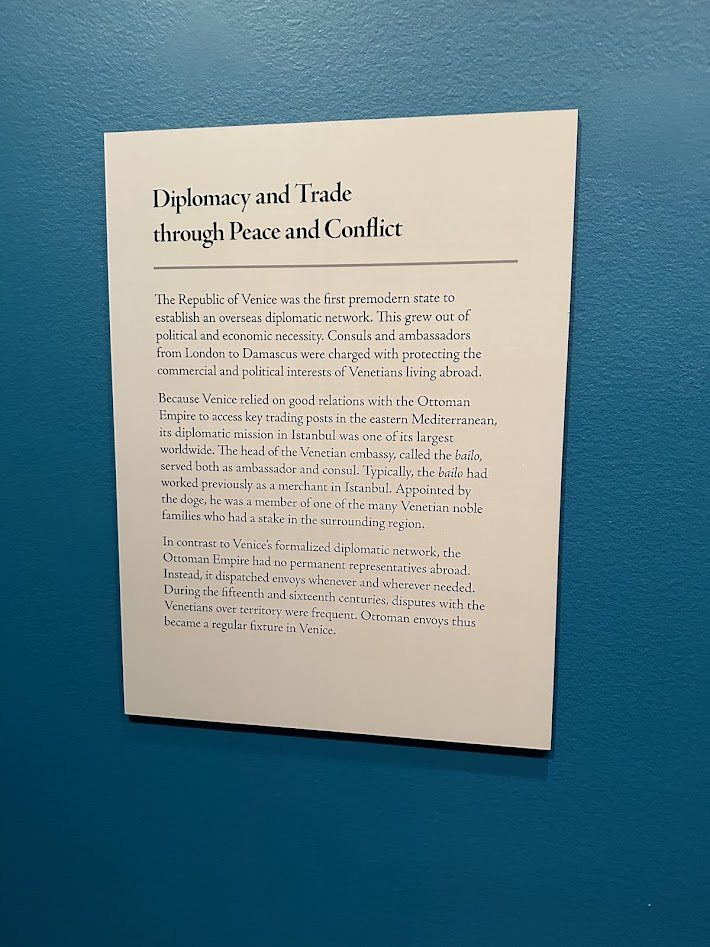
Although Venice was wary of the Ottoman expansion, it recognized the need to maintain a working relationship to secure its trade interests. The Ottoman Empire, particularly under the reign of Sultan Mehmet II, admired Venetian culture and seafaring expertise.
Despite their differences, the two empires forged a mutually beneficial trade relationship that lasted from 1458 until Venice’s fall to Napoleon in 1799. This exchange of ideas, customs, and artistic styles contributed to the cultural flourishing of both societies during their respective golden ages.
The Exhibit: Venice and The Ottoman Empire:
I was fortunate enough to first attend this exhibit during a preview event in September, which included a brief lecture by members of the Fondazione Museums in Venice, along with a culinary taste of Venetian inspired food and entertainment.
The North Carolina Museum of Art is known for having a stellar collection of Renaissance art, including amazing works by Venetian artists like Titian, Tintoretto and Veronese. These pieces were seamlessly blended into the traveling collection.
Each piece in the exhibit demands time to study and reflect on. The exhibit does a marvelous job of bringing the Venetian and Ottoman story together in a digestible way.
Exhibit Highlights for me included:
Vittore Carpaccio:
I fell in love with Vittore Carpaccio’s work during a special exhibit at the National Gallery in DC in 2022. The following year, I had the privilege of seeing more of his paintings in Venice. Carpaccio’s ability to bring his subjects to life with such realism and vibrancy is truly captivating.
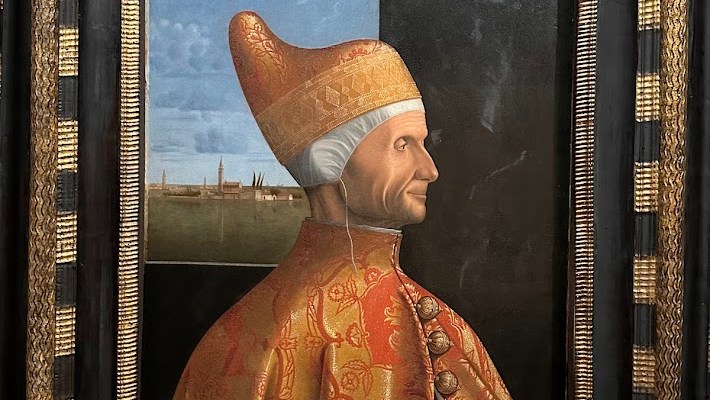
This exhibit features a fantastic portrait by Carpaccio of the Doge Loredan. The details are so sumptuous and refined you feel as though you could touch the Doge’s clothing and feel the fabric.
Learn more about Carpaccio from an earlier blog post here
“Painted as it would be seen from within the doge’s apartments in the Palazzo Ducale, the view of the seascape in the background completes the portrait. This emphasis on the maritime dimension of Venice may well commemorate the mercantile origins of the doge, who spent his youth on galleys trading with the East and Africa. It could also reflect the naval exploits of the extended Loredan family, particularly the doge’s brother Antonio who had successfully defended the Venetian stronghold at Scutari against the siege of the Turks in 1474. Beyond that, the emphasis on the basin of San Marco, and, more generally, the open sea beyond it, might point to an ideological position of the doge, who during the Cambrai wars (1508–16) decided to set aside plans for expansion on the mainland in favor of strengthening the Stato da Mar.” – From Save Venice article, who helped fund the restoration of this painting
Gentile Bellini:
Any chance you can see a Bellini family painting in person is a reason for celebration. The Bellini family, composed of father Jacopo, sons Gentile and Giovanni and brother-in-law Andrea Mantegna…were the force of art in Venice for a generation.
Gentile collaborated with his brother Giovanni on important works including the Sermon of St. Mark in Alexandria
*History insight: Venice became the final resting place for St. Mark the Evangelist, after the Venetians stole his body from Alexandria after the city was taken over by Muslims. The Venetians hid the body in a vat of pork to sneak past the guards, before eventually taking it over the Mediterranean to Venice. The body is housed in The Basilica of San Marco in Venice, where the faithful can venerate the great evangelist. Learn more about the ‘stealing of St. Mark’s body here
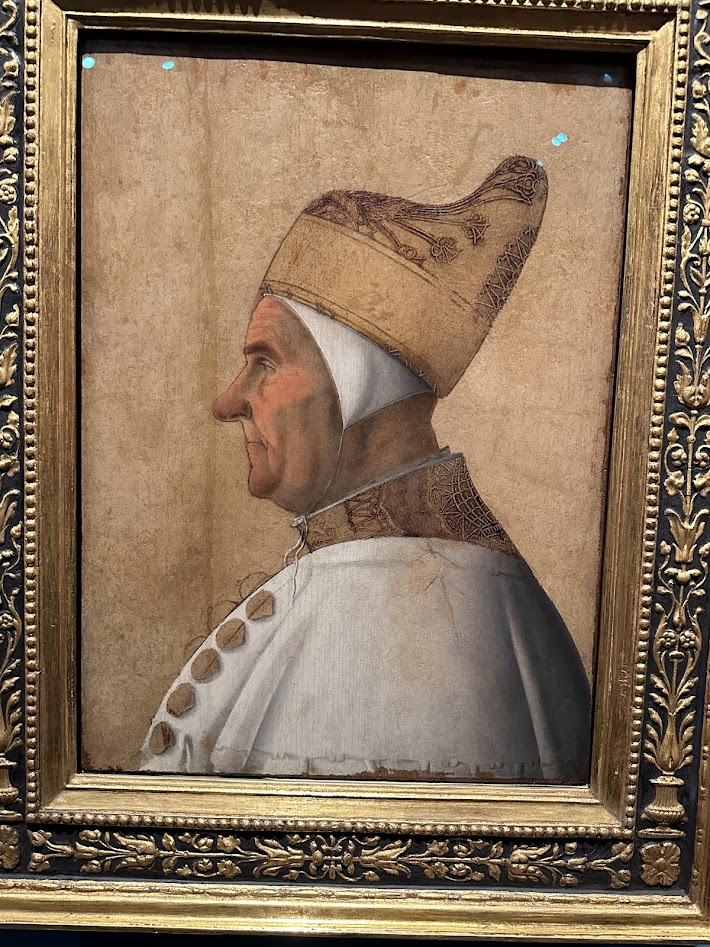
From 1474 until his death in 1507, Gentile was the official portrait painter of the Doges of Venice.
Sultan Mehmet of the new Ottoman Empire, was a huge fan of Venetian artwork and the Bellinis. He requested that Venice send Gentile to Constantinople/Istanbul in 1479. During this stay, Gentile painted one of his most famous works, a portrait of Mehmet II, which is housed in London’s National Gallery. This painting is a reflection of the Venetian and Ottoman relationship as it moved to one of conflict, to instead one searching for common ground in art and trade.
This exhibit features a well known portrait by Bellini of Doge Mocenigo from 1478. This work comes from Venice’s famed Museo Correr, located in St. Mark’s Piazza.
The Wreck of the Gagliana Grossa:
Attention treasure hunters, in this exhibit you have the chance to learn about a real treasure hunt, as you view a trove of objects salvaged from a major Adriatic shipwreck. The large Venetian merchant ship Gagliana Grossa sank en route from Venice to Istanbul in 1583.
The shipwreck was discovered in 1967 at a depth of 90 feet. Among the recovered items were fine and ornate glass bottles, vases, rare goblets and drinking glasses. The cargo recovered also included nine bronze guns, dozens of barrels with lead paint, brass chandeliers, shaving instruments, rolls of silk and more…just a window into the world of trade between these two empires.
This is the first time these rare artifacts, lost to the sea centuries ago, have been on display in the United States.
A few other highlights:
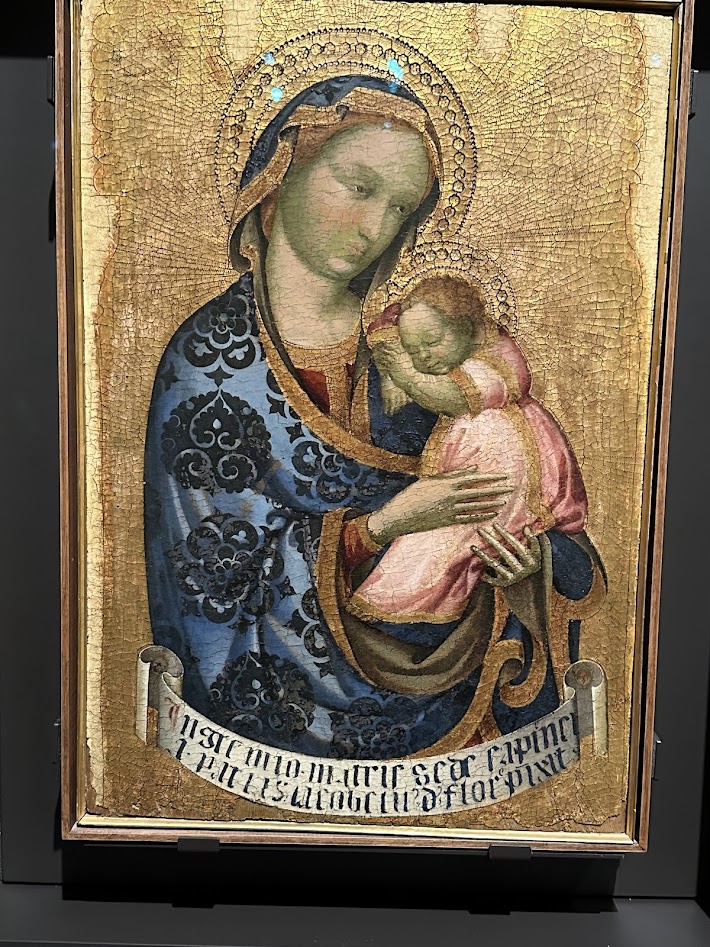

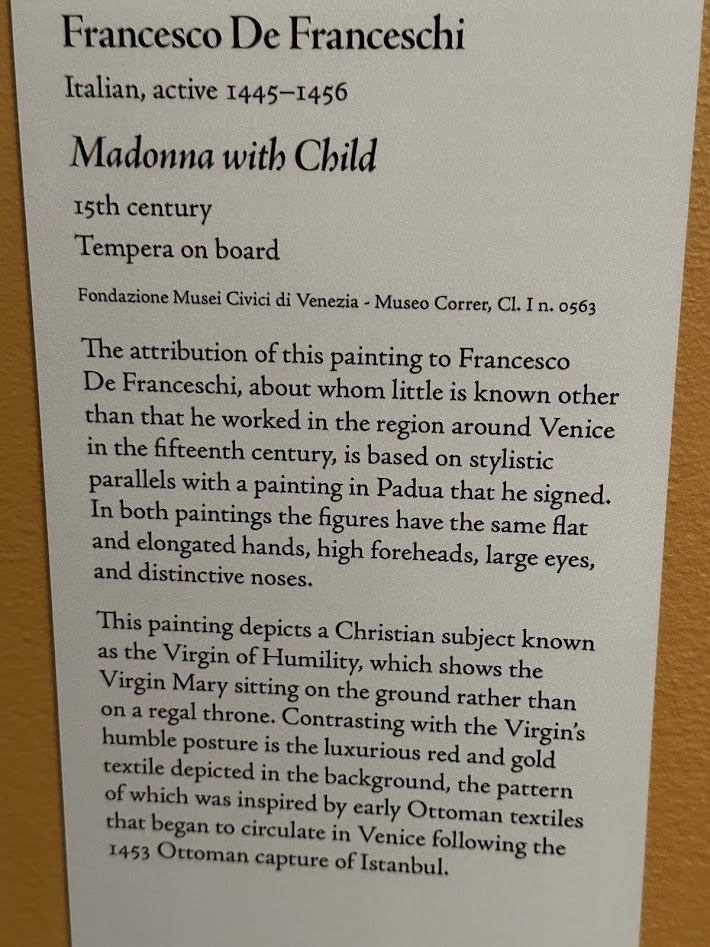
Hands down this is a MUST-SEE exhibit.
Plan your visit via the NCMA website here:
While at the NCMA, don’t forget to check out their wonderful permanent collection, which includes Renaissance highlights from Botticelli and Giotto to Impressionist painters like Monet and Pissarro.
While at the museum you can grab lunch at the cafe and also explore the outdoor sculpture gardens.
Till next time as they say in Italy: ‘Arrivederci’
Additional Reading/Resources:
 Art Expeditions