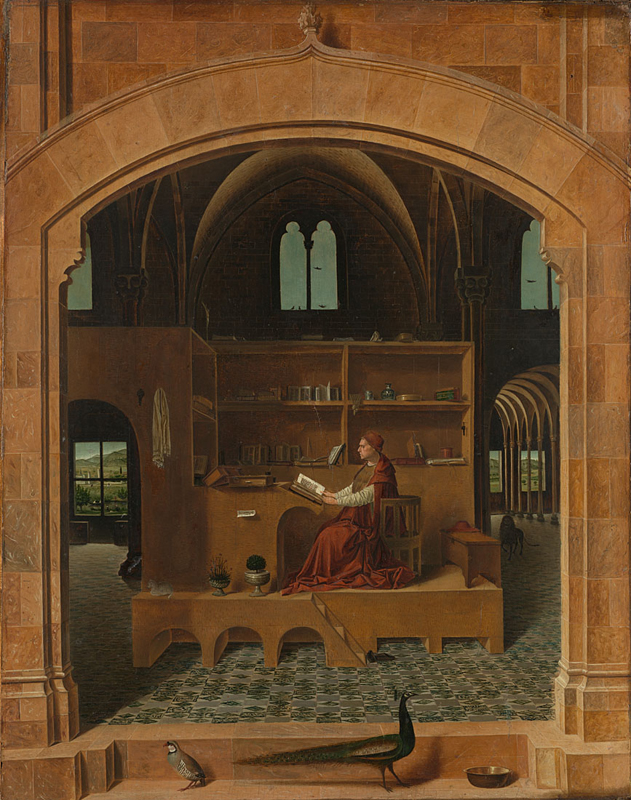
Last time on Art Expeditions we learned aboout The Bellini Family and their impact on art history in Venice…one of the key influencers of Giovanni Bellini was Antonello da Messina who lived in Venice for a time and brought his masterful skill of oil painting to the area.
Antonello was born at Messina circa 1429 to Garita and Giovanni de Antonio Mazonus. His father was a well known sculptor and trained his son early on in his study of the arts.
Antonello first apprenticed in Rome and then was sent to Naples.
Naples, another powerful Italian seaport had strong trade ties with other regions and it believed this is where he was introduced to oil paints and Netherlandish painting.
- The population of Naples valued Northern European art and many in the area were exposed to works by masters of the era. Netherlandish art by the likes of Jan van Eyck was extremely detailed, filled with symbolism and a realism unlike anything seen in Italy to that point.
- Netherlandish painting cares about perspective, but is not afraid to keep the fully realism in a painting so sometimes it doesn’t feel quiet as smooth as perhaps a Florentine master’s work.
- The Dutch early on were masters of light and dark in their composition
- The Dutch also were the first to paint the ‘half Cross’ Crucifixion which feels more abrupt but brings you into the scene of Christ’s sacrifice in a personal way.
in addition to Flemish masters he studied in Naples, his Italian neighbors also influenced his style. He had a working knowledge of Piero della Francesca and was inspired by della Francesca’s use of volumetric proportions on the figures.
Antonello went to Venice in 1475 and while he only remained a year his impace in the city made a important dent on the city directly inspiring and influencing Giovanni Bellini and others.
Instead of accepting an offer to become a court painter in Venice, he returned to Messina to become the court portrait painter for the Duke of Milan.
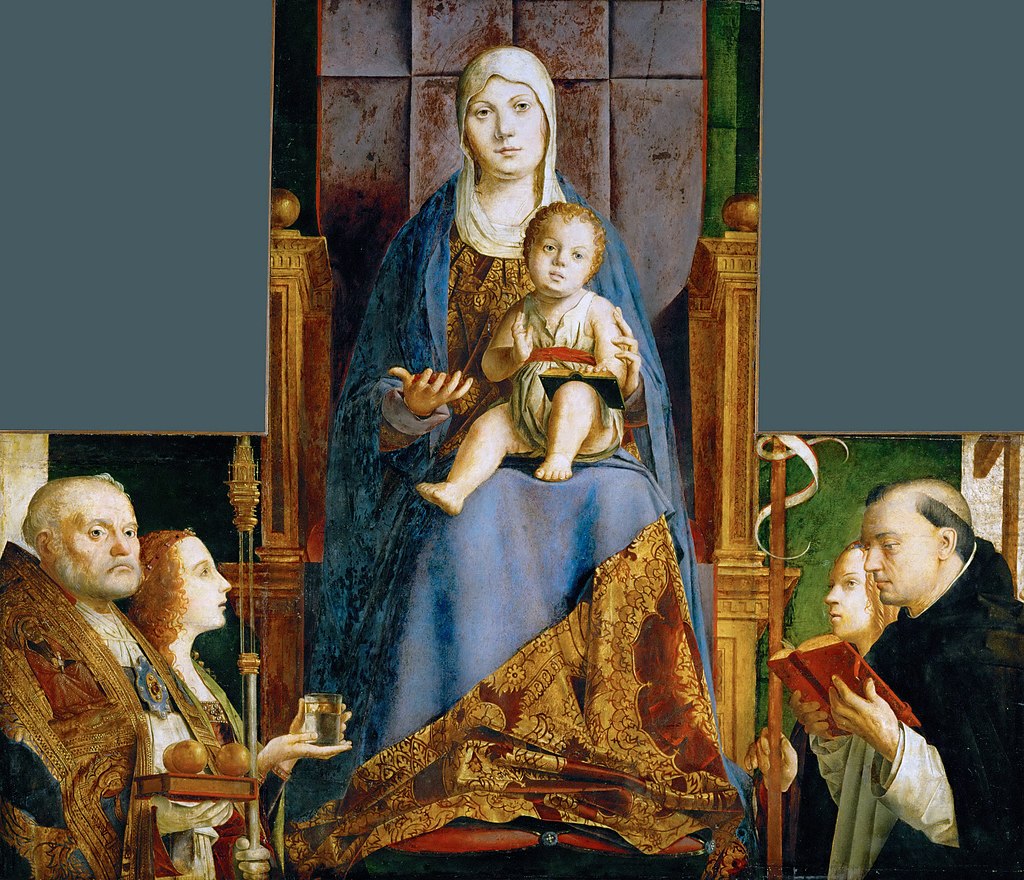
One of his most influential paintings in Venice was the San Cassiano altarpiece, which is now at B Kunsthistorisches Museum Wien, Bilddatenbank in Germany. Sadly at some point it was cut, but what remains is beautiful.
His most famous work is argubly St. Jerome in his study in The National Gallery in London.
This work is so detailed and in line with The Flemish influence that many thought it was by a Flemish painter. It is masterfully done to invite you into ‘the sacred living space’ of St. Jerome – gracefully extending the wall into another dimension we can walk into.
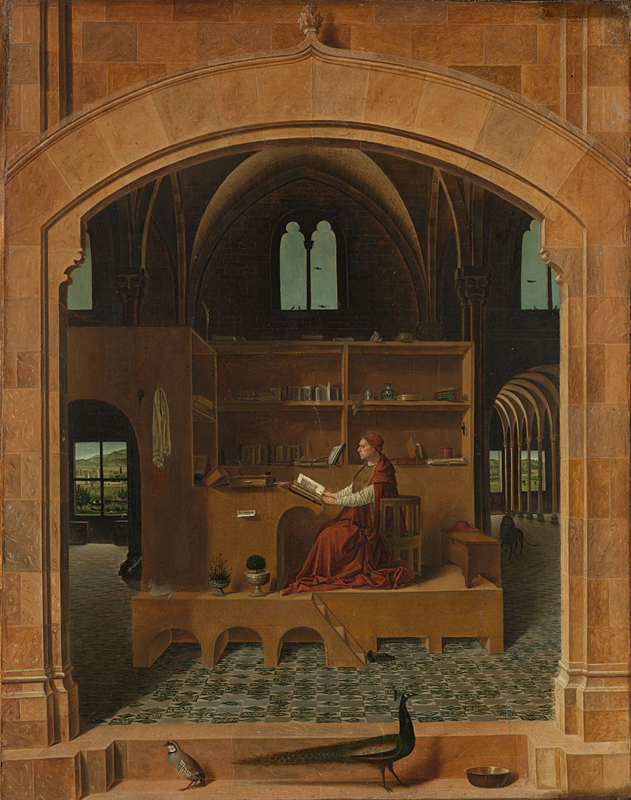
He is most famous for translating The Bible from Hebrew/Aramaic/Greek into Latin Vulgate.
Jerome is often seen reading to show his education and in many paintings can be seen with a lion. You can see the Lion in the background wandering the hall.
And look at the depth of this image – it truly feels like you could go on and on forever walking into the study. That is a marked difference in progression of Renaissance painting versus the High Gothic/Medieval period.
You also see symbols like:
- The peacock, which at the time was believed to represent eternal life. It symboles divine omniscience
- The precision of the architecture is a reflection of the wisdom of God and his perfect creation and St. Jerome’s deep wisdom through study of scripture. The church is not just a reflection of fairytale ideals but true wisdom and learning and doctors like Jerome were reflective of that in religious art.
- The slippers are at the bottom of the steps because he has entered a sacred space of reflection and spirtually (like Moses when he saw The Burning Bush) you take your shoes off on holy ground.
- Partridge alludes to the Truth of Christ
- A sleeping cat at Jerome’s feet in my opion represents that Christ has conquered the devil. Often in paintings cats can represent triumph over evil because they catch the mouse (mousetrap), which goes back to a saying from early doctors in the church.
This painting is actually fairly small and yet packs so much detail you could spend hours contemplating it.
I researched the water bowl and while I could find a specific reason for this in the image, I think it has a symbolism, even if it would be common place in our own lives to feed animals like a cat or lion.
Perhaps it aludes to the Holy Water at the Fount when you enter a church – the symbol of Baptism before entering the study? What do you think?
The amazing thing about art, whether it is Renaissance depictions of the saints or modern art, it draws use to reflect on the mystery and truths in the painting. Some paintings may speak to us more than others and that is okay!
Don’t forget to subscribe for more Art Expeditions posts including The Masters of Venice series!
 Art Expeditions