
Art is on the menu! Nashville’s FRIST Center for the Arts invites you to savor its latest exhibition, Farm to Table: Art, Food and Identity in the Age of Impressionism. This fascinating show explores the dynamic intersection of art, national identity, and the burgeoning world of gastronomy in late 19th-century France.
Located in the heart of Nashville, The FRIST is one of my favorite museums to visit. The art-deco style architecture (once an old post office) is a masterpiece within itself. While a student at Belmont University, I was honored to have the chance to volunteer at The FRIST with volunteer drives. What makes The FRIST unique is it doesn’t have a permanent collection, so they are able to get a lot of amazing traveling shows from around the world every few months. *Learn more about the architecture of The FRIST here.

For me, Farm to Table, was worth the 10 hour drive from Raleigh to Nashville to see (I was in town recording music, but chose this week so I’d be able to catch the exhibition)
Nineteenth Century France – a confluence of change and coming together through common French culture…
From 1850 onwards, the burgeoning industrial age fueled a departure from traditional mythological themes, inspiring artists to find beauty and meaning in the everyday. Scenes of farmers reaping their bounty, families gathered around the dinner table, and the honest labor of peasants filled canvases with a newfound significance. Artists like Millet championed these naturalistic pastoral visions, transforming the ordinary into the extraordinary. Simultaneously, pioneers like Corot, armed with revolutionary portable paint tubes, ventured en plein air, forever changing how artists captured the world around them.
This artistic shift was central to the Realism movement, which arose as a direct consequence of the sweeping social and economic changes brought about by rapid industrialization. The era witnessed significant restructuring of society and the emergence of new forms of labor, all of which profoundly impacted how people lived and worked.
This inclination towards realistic representation had precedents in Northern Europe. Dutch artists, for instance, had a strong tradition of depicting realistic landscapes and everyday life in their genre paintings. Furthermore, early French realists, including Corot, drew inspiration from English painters like John Constable and J.M.W. Turner, whose innovative use of color would later profoundly influence Monet. Despite this growing interest in realism, the prestigious Paris Salon largely championed idealism in art. This fundamental difference in artistic vision, while both had their value, created a significant divide within the art world. By 1874, this tension reached a breaking point with the pivotal First Impressionist Exhibition, paving the way for more modern and experimental artistic expressions.
What was the Paris Salon: Between 1667 and 1789, the French monarchy supported regular art exhibitions featuring members of the Royal Academy of Painting and Sculpture. Starting in 1725, these exhibitions were held in the Salon Carré and adjacent rooms of the Louvre, leading them to become known simply as the Salon. In the late 1850s through 1880s, the old guard of The Paris Salon rejected the new emerging styles like Impressionism and Realism, favoring dramatic paintings depicting biblical, mythological and historical stories on huge monumental canvases. Artists like Gerome were popular with The Salon.
Food for thought: While I do love works by Gerome and the establishment as well… there is a wonderful richness in exploring the artistry with the everyday wonders of our lives. How many seemingly mundane tasks are truly extraordinary. I think about COVID and not being able to go to the grocery store in person for months. It is so mundane and yet wonderful. I can imagine the French artists felt this way too as industrialization and war shifted society.
While food, a centerpiece of French and European culture, has long been explored in still lifes by the likes of Chardin, this ‘modern’ movement of farm to table art didn’t just create the sumptuous, pristine, and symbolic still lifes that once adorned the Paris Salon, but also explored very simple, yet rich scenes of a family meal, or a plate of potatoes or fruit.
The artistic community in Paris was not universally receptive to this elevation of daily life. The Paris Salon famously rejected many works by artists like Monet, Pissarro, and Morisot, who were boldly experimenting with their styles and embracing subjects drawn from everyday life. It was this rejection by The Paris Salon that led to the first Impressionist Exhibition in 1874.
The desire to fit into the salon and forge further into elevating ordinary life and art only grew stronger after France’s humiliating defeat in the Franco-Prussian War of 1870, which led to a temporary occupation of Paris by the Prussian army, followed by a Paris Commune led by Parisians that was then ended violently by the French government. Renoir was one of the artists who lived through this ordeal, while early Impressionist (before it even had a name) Frédéric Bazille died tragically in the war.
The defeat brought a hope for a deeper national identity where art, food, and the common culture of France formed a foundation for a new future.
Food is a staple that binds us all together. The idea of breaking bread, showing hospitality to strangers, exchanging recipes has always brought humanity together. In France, a country with such a rich culinary culture, it only makes sense that artists would explore France’s renowned culinary culture through art.
Impressionists often connected at cafes and over coffee, sharing ideas and ‘breaking baguettes’ as they discovered art and their daily lives. The exhibit does a wonderful job bringing the intersection of French history and culture together in a collection of art.
The exhibit was organized by Norfolk’s Chrysler Museum and features pieces from around the United States and Europe.
Exploring The exhibit:
Throughout the exhibition visitors are treated to nearly sixty works from luxurious meals, humble fare, bountiful harvests, agrarian famines and how community is shaped by food.
The exhibit is subdivided by various food themes:
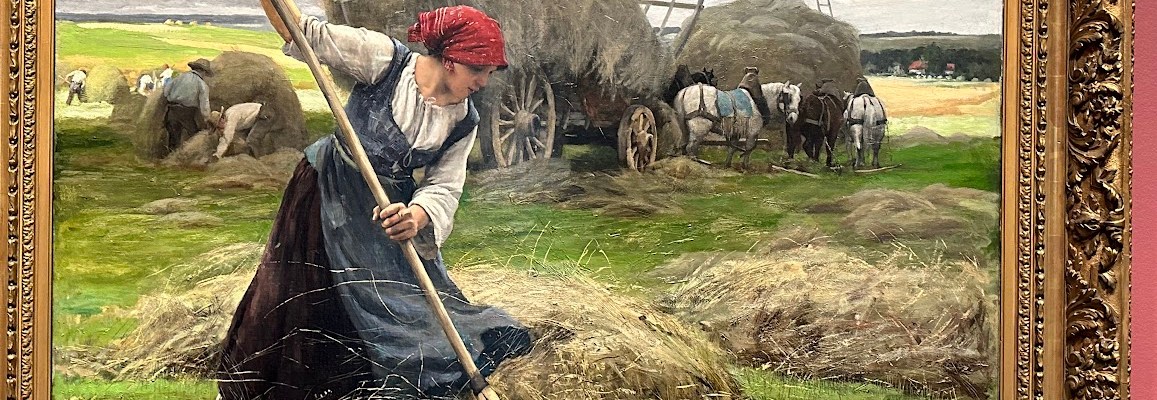
- On the Farm: art depicting the realities and idealization of farming and husbandry from the fields of rural France to the kitchen gardens of the country’s urban centers and lands of France’s colonial empire (like Algiers).


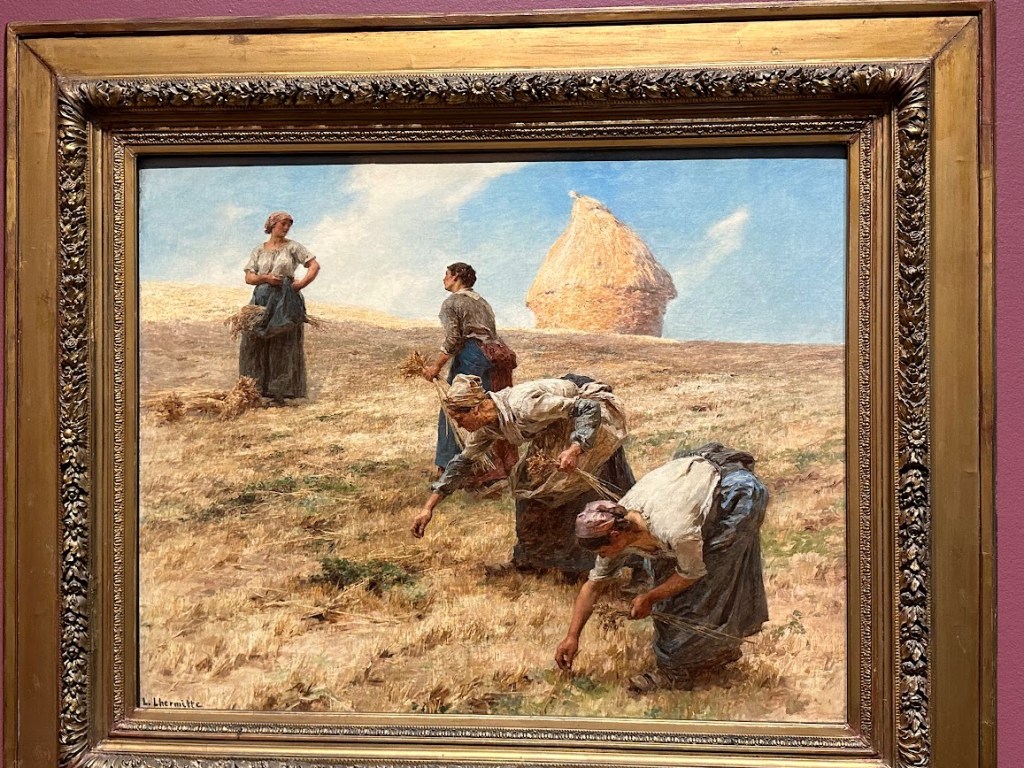
- To the Market: Markets were central to the culinary economy, acting as the vibrant intersection where the processes of harvesting, transporting, and selling food from farms and the sea converged with eager consumers. Within their lively atmosphere, people of all social classes, economic means, geographic origins, and culinary traditions mingled amidst colorful displays of fruits, vegetables, fish, dairy, and meat. For many artists, the market offered the perfect setting to showcase everyday life and the gathering of community around food.
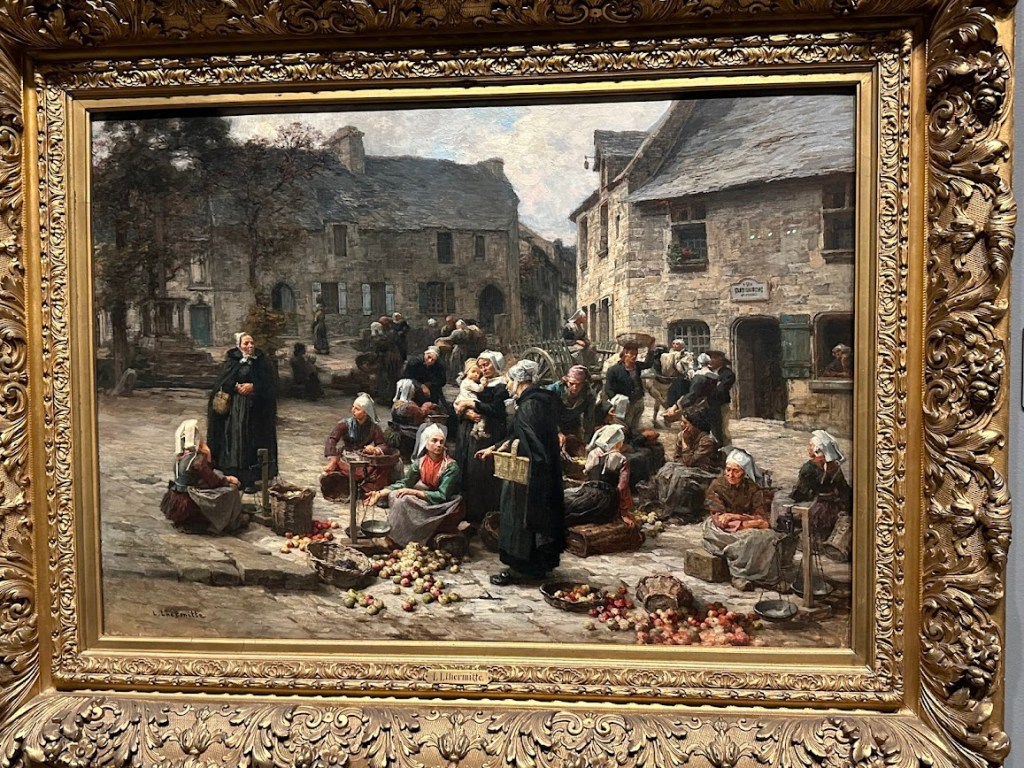

- Food Still Life: The seemingly simple subject of food in still life paintings often belied underlying social commentary rooted in the era. Take Gustave Courbet’s austere fruit depiction from 1872. Though appearing politically neutral, its creation coincided with his jailing for actions supporting the Paris Commune—a radical movement advocating against social and governmental conservatism and corruption. Consequently, the work’s unembellished portrayal of fruit became associated with the humble character of the working class. In other instances, painted cuts of meat functioned as symbolic representations of both revolutionary violence and the burgeoning field of medical research. Furthermore, displays of opulent pastries not only illustrated the influence of the colonial sugar trade but also highlighted the inventiveness of French food scientists and the growing emphasis on artistic presentation.
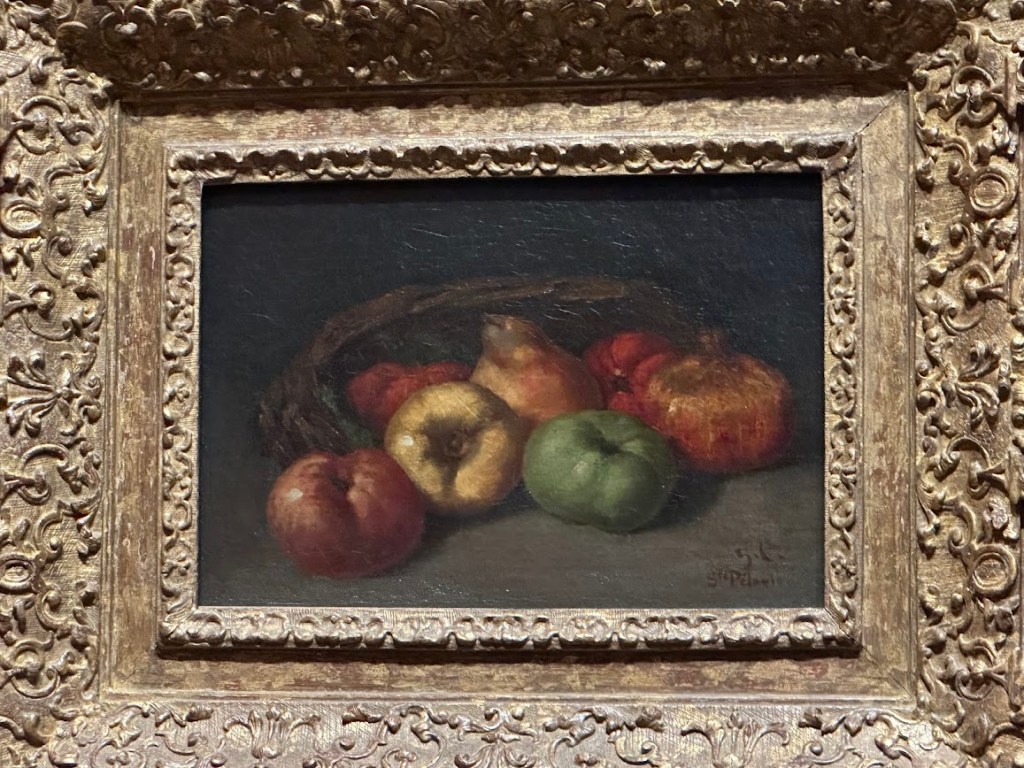
- Food Workers A series of artworks that dive into the laborers whose efforts helped bring food from farm to table. Whether in paintings of young cooks or female servers, these paintings highlight the impact of the food economy on the revolution in gender and class norms in the final decades of the nineteenth century.
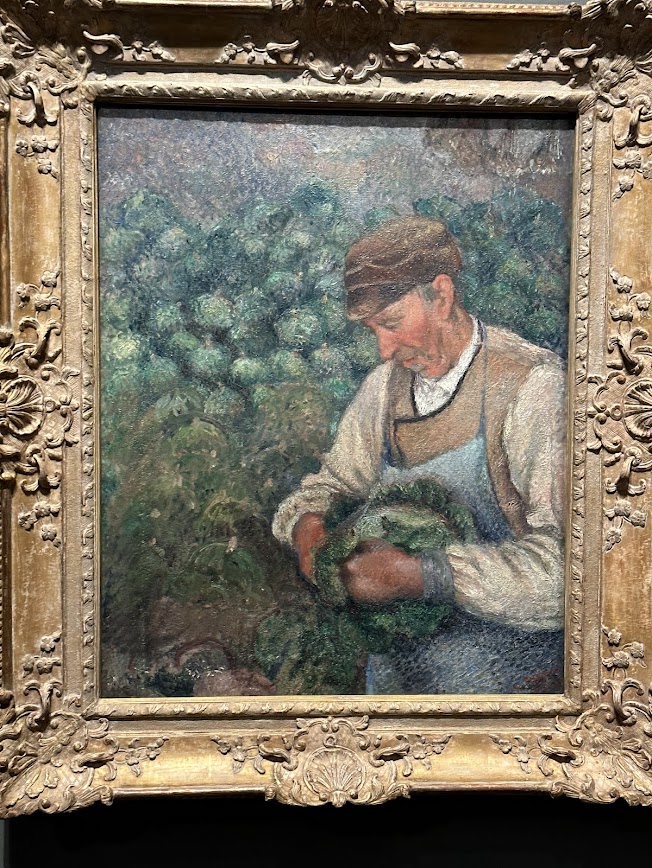
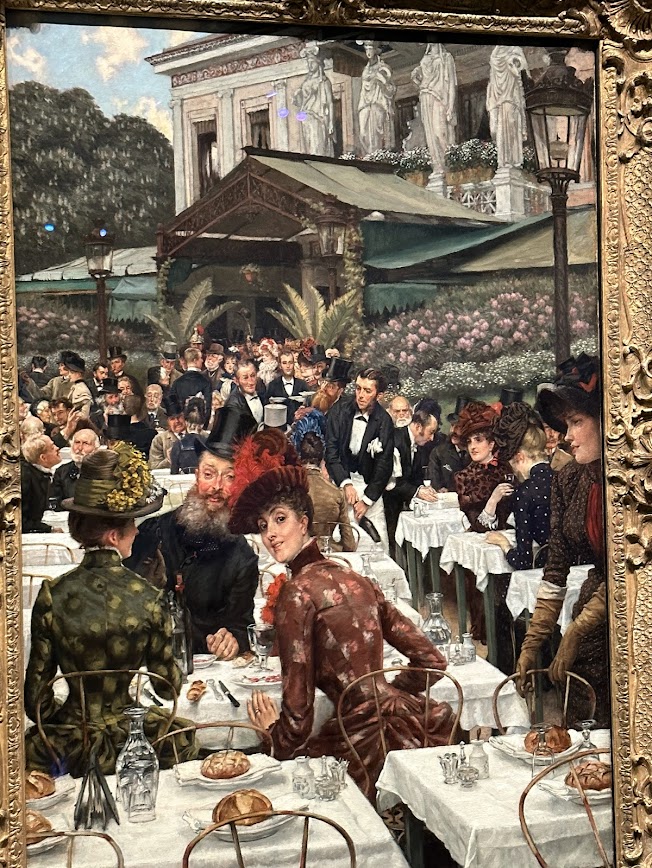
- At the Table: Questions of family, community, citizenship, and spectacle came to the fore as artists in the age of Impressionism focused on the dining experience. They took on subjects ranging from dates at fashionable Parisian restaurants to the diverse practices of quiet family meals across the empire, to the meager fare of the poor and those impacted by wartime food shortages. In doing so, they examined not only the culture of consumption across the economic spectrum, but also customs, manners, and mores associated with dining together, both in public and private settings. *from FRIST website*


Tennessee Harvest
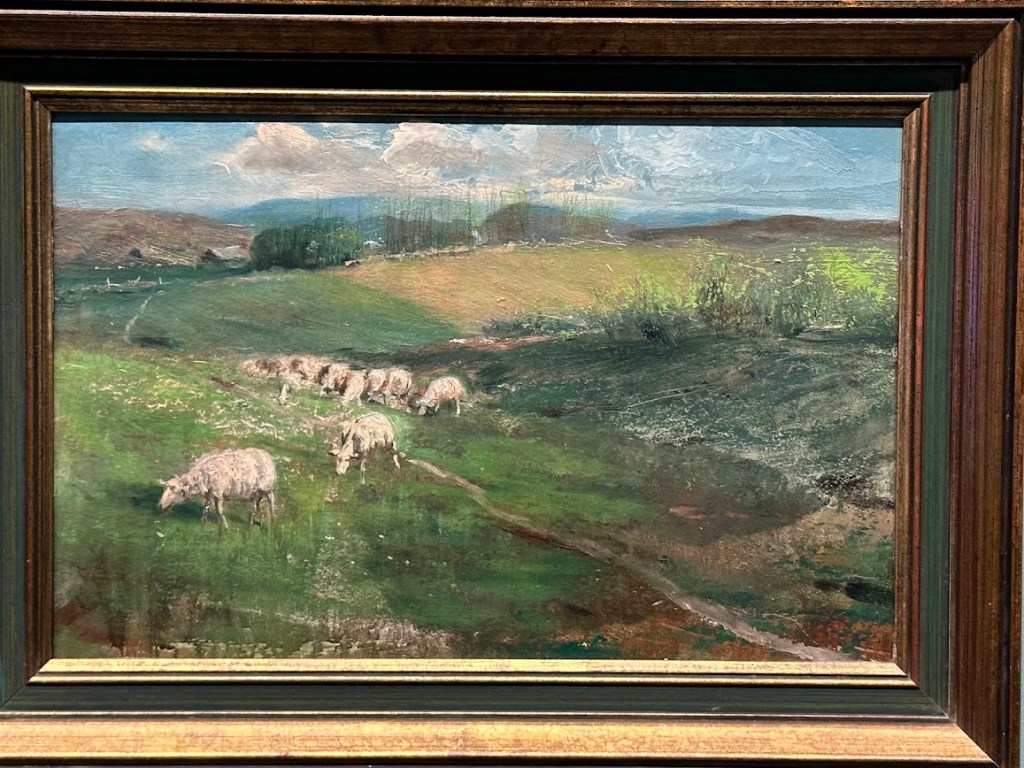
The core exhibit was paired with another wonderful exhibit about food and art- Tennessee Harvest focuses on 19th-20th century painters with ties to Tennessee and their interpretations of food and agriculture in The Volunteer State. This exhibition shows how artists like Lloyd Branson, George Chambers, Gilbert Gaul, Cornelius Hankins, Willie Betty Newman, Catherine Wiley, and others absorbed and adapted European influences in both subject matter and style.
“As with their French counterparts, these Tennessee artists often romanticized agricultural life. Showing strong, hard-working farmers and harvesters, they celebrate rural self-sufficiency and resiliency. Intentionally or not, this reinforced the perception of the turn-of-the-century South as a distinctly agricultural economy, even as manufacturing and other industries were on the rise. The paintings also warrant study for subjects they omit—Black farmers, markets, and cooks. To present a more complete view, the exhibition will include photographs showing the broader realities of food production across the state.”
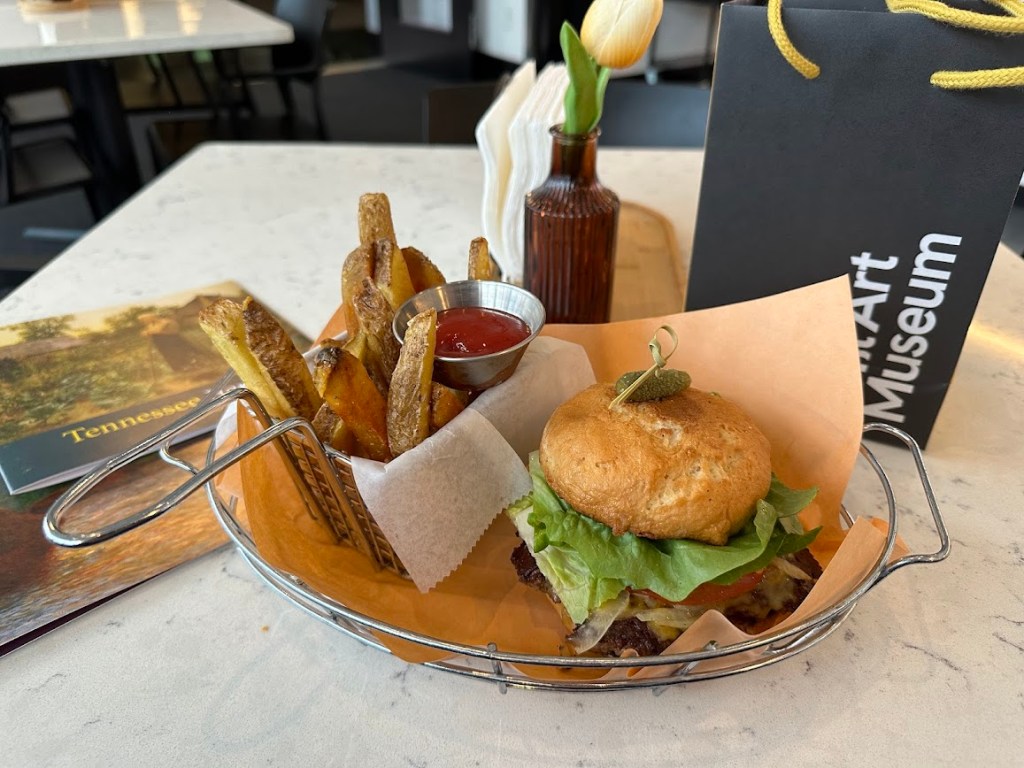
While at The FRIST, don’t forget to grab a bite to eat at the scrumptious cafe, where I took the farm to table experience to heart – reading art brochures while enjoying a satisfying lunch.
The Farm to Table exhibition runs through May 4th, and will then head to Cincinnati.
Don’t forget to subscribe to Art Expeditions for the latest in art history and art travel.
*Art Expeditions is written by artist and art history buff, Adele Lassiter. When she’s not going ‘baroque’ visiting museums, Adele is a singer-songwriter, whose EP American Nomad is out now on all streaming platforms and bandcamp.
Coming up on Art Expeditions in May 2025:
Philadelphia Art Museums – Deep Dive
Tour of Nashville’s Parthenon
Follow us on facebook
 Art Expeditions
[…] Before leaving Nashville to begin my journey back home, I stopped by The FRIST Museum of Art to tour their fabulous Farm to Table art exhibit, which featured works by Monet to Renoir and beyond. You can read about my FRIST ART Expedition here. […]
LikeLike
[…] FRIST Museum of Arts: One of my favorite Art Museums…I used to volunteer at The FRIST during college. They don’t have a permanent collection, but instead get amazing traveling exhibits. Read about their recent Farm to Table exhibit from our sister blog Art Expeditions […]
LikeLike