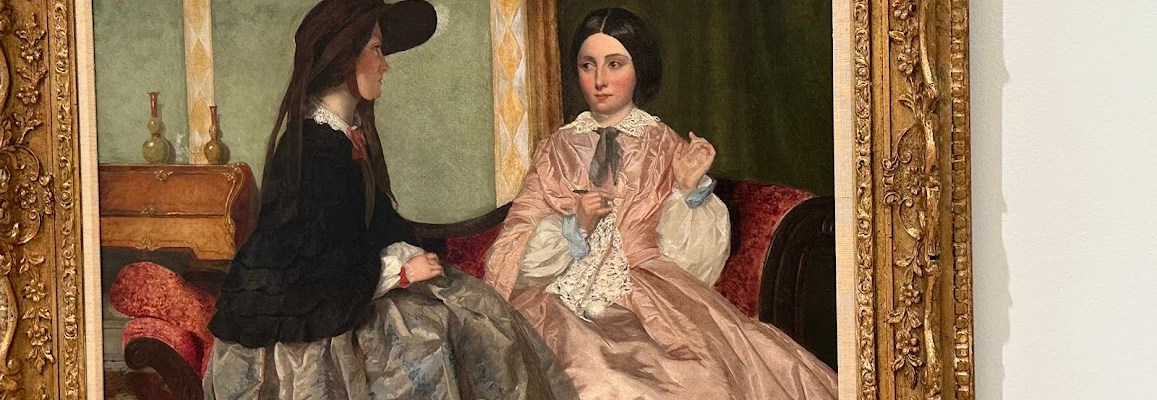

The Muscarelle Art Museum at William & Mary
Our last art expedition brought us to the truly once-in-a-lifetime Michelangelo: The Genesis of The Sistine exhibit, showcasing twenty-five preparatory drawings by Michelangelo for the Sistine Chapel. These incredibly fragile drawings are only displayed for a few months every five years, making it a genuine “miracle” to see them in person in Williamsburg.
Williamsburg has long been one of my favorite travel destinations. As a passionate history buff, especially of the Revolutionary War, I consider Williamsburg ground zero for delving into early Colonial America and the Revolutionary War.
A few years prior, I had the pleasure of visiting the Colonial Williamsburg Art Museums, endowed by Abby Aldrich Rockefeller. This remarkable collection, which I plan to explore in a future art expedition, features one of the best assortments of Colonial and early American art—from portraits by Sully and Stuart to handmade furniture, folk art, and more.
Even with my many trips to Williamsburg, The Muscarelle somehow remained off my radar until the Michelangelo exhibit. It had only recently reopened after a significant two-year renovation, and the pandemic meant I’d missed earlier opportunities to visit until now.
Getting the Michelangelo exhibit was a huge win for the museum, largely thanks to Muscarelle staff member Adriano Marinazzo. He’s an Italian native who even worked at Michelangelo’s family home in Florence, Casa Buonarroti, and he personally wrote the exhibit guide and handled the curation. Fun fact, during his work in Florence, Adriano figured out that a drawing by Michelangelo was actually the first preparatory sketch the artist did for the Sistine Chapel.
I’m confident this fantastic museum will keep bringing us more outstanding exhibits in the years to come!
Before we get started on our tour, you can find helpful information about the museums hours, tickets and collection on their official website.
The Muscarelle’s permanent collection truly impressed me. Although I expected a quality art collection from an institution as established as William & Mary, I was genuinely blown away by the depth and strength of what they’ve amassed.
About William & Mary
Founded in 1693, The College of William & Mary is the second oldest institution of higher learning in the United States. It’s the alma mater of many of America’s leading founders and early presidents, including Thomas Jefferson and James Monroe. William & Mary continues to uphold its tradition as one of the finest academic institutions.
The campus itself is one of the prettiest in the country, with several buildings dating back to the 18th century, including the iconic Christopher Wren-designed building.
Visiting The Muscarelle
The Muscarelle can be found in the heart of the core campus, housed in a modern building only about a block from the tourism district of Merchant Square and Colonial Williamsburg. The museum offers a small parking lot, or you can find ample off-street parking or use nearby public lots.
The museum’s interior boasts beautiful gallery spaces that showcase the artwork in a peaceful atmosphere. The diverse permanent collection spans over 8,000 works. It includes Colonial American and 17th-18th century portraits, historical artifacts and artwork from Virginia, as well as pieces by European Masters like Luca Giordano. You’ll also find American Art from The Hudson River School, with works by Thomas Cole and Jasper Cropsey, alongside modern art and local artists.

Their American collection, spanning the Colonial era through the mid-20th century, truly shines. I found myself repeatedly drawn back to the galleries, captivated by works ranging from early American portraits of figures like George Washington, to pieces by admired painters such as Cropsey and O’Keefe.
The Found of The Alma Mater of a Nation Exhibit
Our tour began with The Muscarelle’s special exhibit, “The Founding of The Alma Mater of a Nation.” As the United States’ second-oldest university and alma mater to countless statesmen and pivotal Americans, William & Mary rightly earned its nickname: ‘The Alma Mater of the Nation.’
This particular collection coincides with the 332nd anniversary of William & Mary’s Royal Charter, establishing it as a perpetual college of learning in Virginia. The institution’s history runs incredibly deep. Through influential professors like George Wythe—the Father of Jurisprudence who taught Thomas Jefferson—and countless others, William & Mary fostered a culture of profound intellectualism and independent thought. This environment undoubtedly helped shape the minds and ignite the strength of many early Americans crucial to forming an independent nation from Great Britain.
It’s truly amazing to consider that William & Mary has remained a center for higher learning for over 300 years, steadfastly evolving from Colonial America through the American Revolution, the Civil War, and beyond.
William & Mary is considered one of 8 public ‘Ivy Schools’ – schools that have the same level of an Ivy League education but for a much affordable price. William and Mary continues as directed in its original charter to be a ‘perpetual college of learning.’ And what is learning without an understanding of the arts and art history?
- Of particular interest: William & Mary counts among its alumni U.S. Presidents Thomas Jefferson, James Monroe, and John Tyler. George Washington also earned his surveyor’s license at the institution. Furthermore, it served as the alma mater for multiple signers of the Declaration of Independence, including Thomas Jefferson, George Wythe, Benjamin Harrison, and Carter Braxton, who were either students or professors.
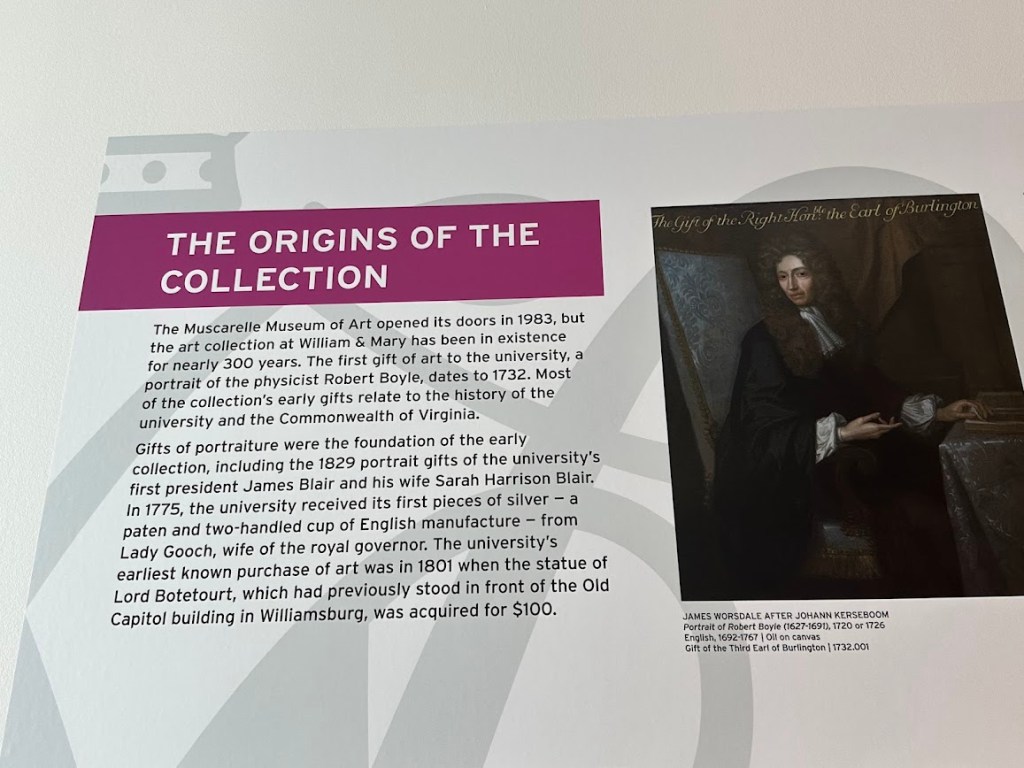
In this exhibit, you can discover William & Mary’s unique origin story through art and artifacts, exploring the Royal Charter and the pivotal figures essential to the college’s founding. A key highlight from the permanent collection is the original portrait of esteemed scientist and philosopher Robert Boyle, gifted to the university in 1732 to begin its collection. While Boyle himself never taught at William & Mary, his scientific and philosophical work undoubtedly shaped the intellectual landscape for early 18th-century staff and students. Furthermore, Boyle’s legacy is directly tied to the university through his estate’s funding of The Brafferton, a campus school for Native American students that was considered remarkably progressive at the time. Learn more about Brafferton and Boyle here.
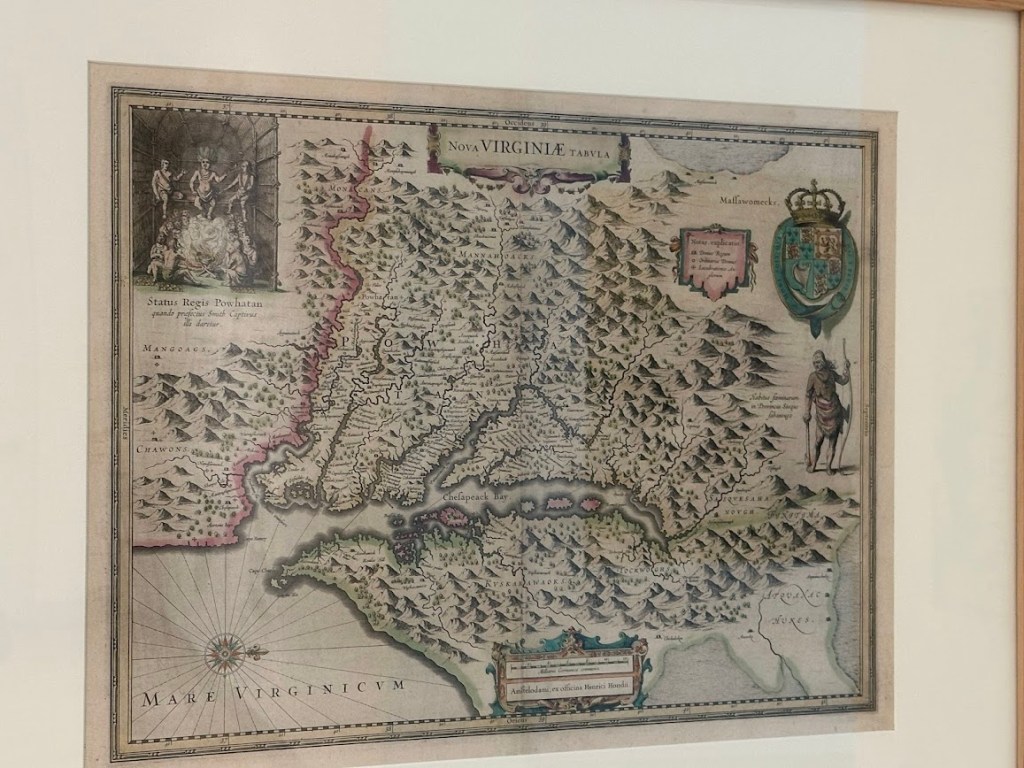
The exhibit features a 1632 Nova Virgininae Tabula – the fifth derivative, or a fifth printing, of the iconic 1612 map of Virginia attributed to English explorer Captain John Smith. Commissioned after his return to England, Smith’s original drawing was engraved on a copper plate for publication, with a cartographer who accompanied him to Virginia possibly assisting in the process. This Smith map remains one of the most recognizable and referenced maps from the colonial era, with derivatives published consistently between 1612 and 1673.
Beyond the cartography, the exhibit also pays homage to the indigenous tribes present during John Smith’s time. Personally, through genealogical research, I discovered I am a descendant of several early settlers to Jamestown (including a Thomas Lassiter and Christopher Banks and his daughter Katherine Banks Royall Isham), as well as Pocahontas. I love connecting with history, especially learning about the Native American roots as well.
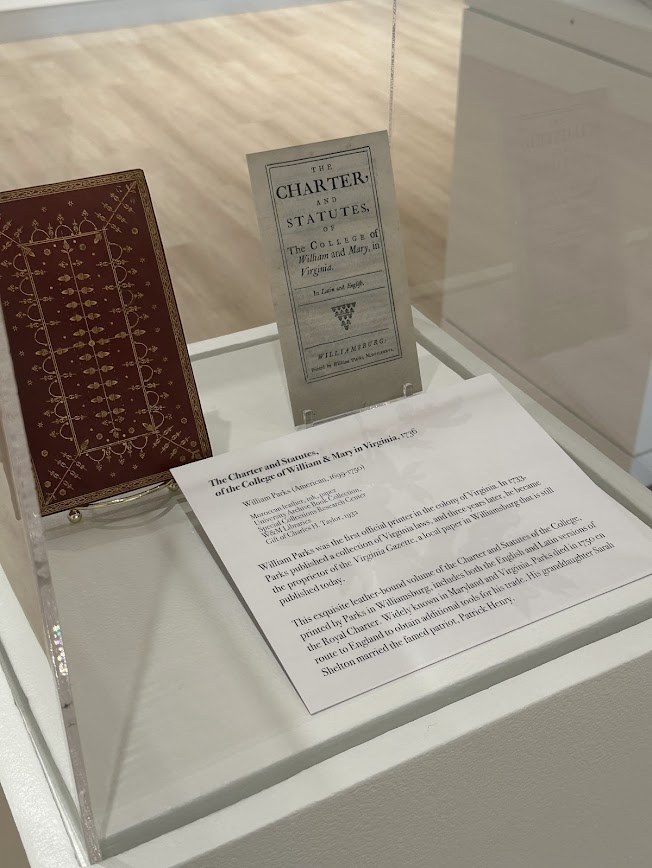
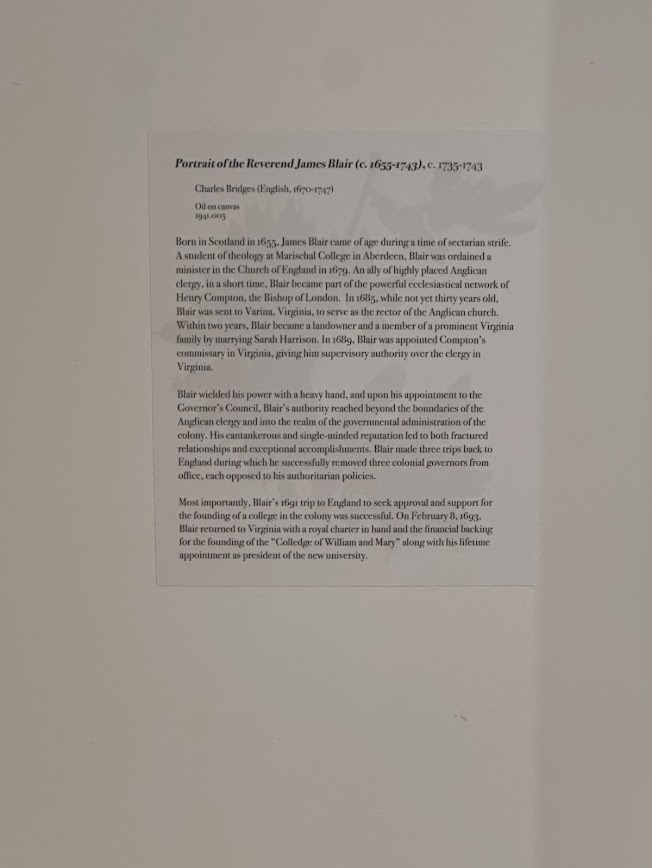
You can also view The Charter for William and Mary, as well as portraits of the college namesake monarchs, who ruled England at that time. Another portrait to note is of James Blair who helped with acquiring the Royal Charter in 1691 and establishing William and Mary in 1693.

If you need a snack before heading to the upstairs galleries, The Muscarelle has a nice grab and snack bar and coffee shop. I was pleasantly surprised to discover they have gluten-free donuts and also Route 11 chips, which are a special treat (off my diet, but delicious) when in Virginia. These kettle cooked chips are popular in the region and great for a snack when in the Old Dominion state.
The Special Exhibit and Permanent Collection Galleries (Upstairs)

Upstairs you’ll discover multiple galleries displaying a wide variety of art from Modern to Folk Art to what I dub American Masters like Sully and Stuart portraits of famous Americans to The Hudson River Valley School to more modern art by Georgia O’Keefe to Julia Cameron’s photography and beyond.
I loved seeing some student and local art on display as well.
While William & Mary has had an art collection since 1732, it wasn’t until the 1980s that it was brought together in one museum space. Prior to that, art had been dispersed and displayed throughout campus. In 1983, The Muscarelle was born and continues to expand. They also host special exhibitions from museum partners, which was on view in the William & Mary Collects Exhibit mixed with the permanent collection.
The Muscarelle’s collection offers enough amazing art to fill countless blogs, but we’ll share a few highlights here to give you a taste of its incredible breadth.
Here are some of my favorite highlights from the collection
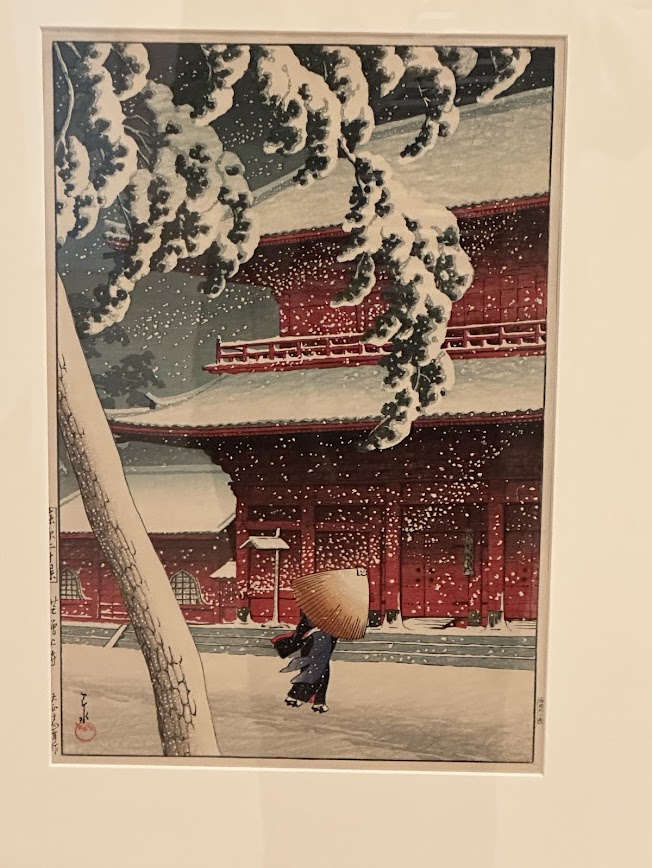
Japanese Woodcuts: The Muscarelle had two amazing works by two of my favorite Japanese artists like Hokusai and Kawase. Art Connections: Did you know that when Japanese art was displayed in France, the designs influenced many artists, especially Van Gogh. It is believed that Hokusai’s Great Wave inspired some of the creative aspects of Van Gogh’s Starry Night.

Giuseppe DeNittis – Italian Impressionist
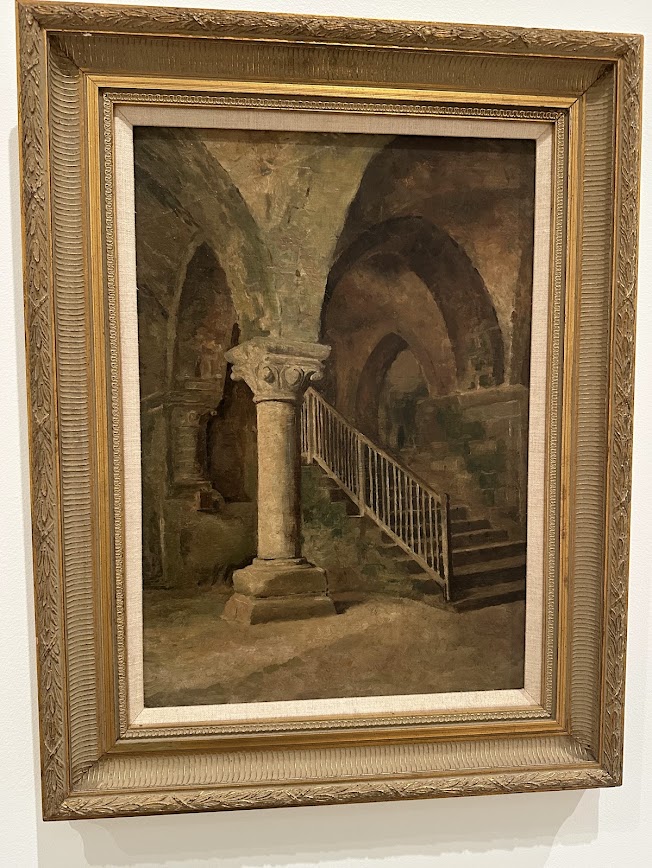
I fell in love with DeNittis after being introduced to his work at The Phillip’s Gallery in DC (The First Modern Art Museum in the US) – DeNittis was an Italian Impressionist who worked alongside of Degas, Manet and others. While his work pops up in collections in the US, he is mostly known in Italy. But to me DeNittis is just as talented as any of the major Impressionists. It was a joy to find this architectural study at The Muscarelle.
Colonial – Early American Art
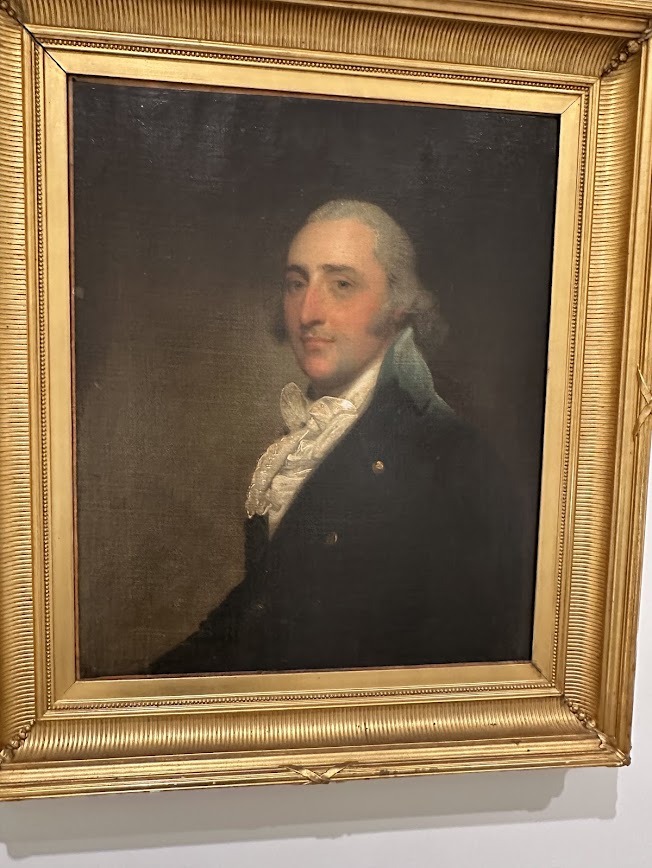
American 1755 – 1828
Charles Lee was a General for the Continental Army in the American Revolution. He is not directly related to the more prominent Lee family of Virginia, but did live in Virginia (born in England). Learn about his military career here.
The artist Gilbert Stuart is one of the most famous of the early American portraitist. He painted many portraits of the founding fathers, but ironically his family were actually loyalists, who fled to Canada after The Battle of Bunker Hill…but his talent made him a sought after painter in England and America. Williamsburg’s Abby Aldrich Art Museum also has several Stuarts in their permanent collection.

While I have to admit this painting is a bit graphic, I wanted to feature it in the blog because, when you realize it’s by John Singleton Copley, the subject and style become all the more intriguing. Copley was arguably America’s first famous portraitist, and perhaps one of his most iconic works is the portrait of Paul Revere. His portraits are renowned for their distinct style and personality, combining realism and meticulous detail with elaborate costumes and settings. He masterfully captured the distinct textures of materials and created the illusion of space with dramatic light and shadow.
This is the first Copley work of a battle scene I’ve personally encountered, although I’ve enjoyed a smaller version of his Watson and the Shark from The National Gallery in D.C. I did some digging and found he completed other works, including those depicting the American Revolution. However, in my opinion, the form and expressiveness in these battle scenes are stylistically very different from his traditional portraits. Copley’s most famous battle scene is The Death of Major Peirson from the 1781 Battle of Jersey. Interestingly enough, that Revolutionary War battle scene is housed in London at The Tate Britain
The scene depicts a 1793 battle between British, Hanoverian, Hessian and Austrian troops against those of revolutionary France. Learn more about this historic siege here.
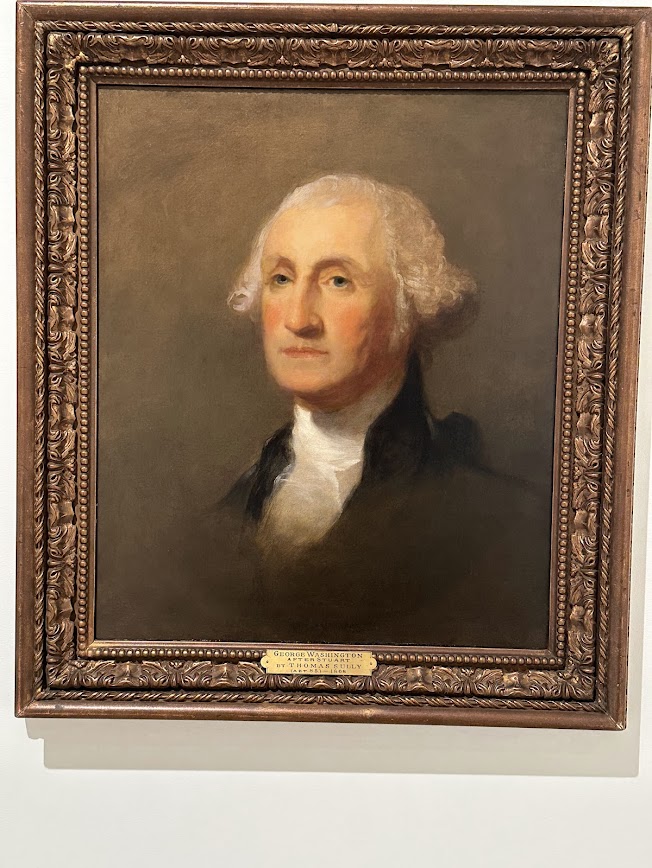
Thomas Sully was a prominent English-American portrait painter. Born in England, he became a naturalized American citizen in 1809 and spent most of his life in Philadelphia, Pennsylvania, residing notably in the Thomas Sully Residence. He honed his painting skills in England under Benjamin West. Sully produced numerous paintings of George Washington, often as copies or from his imagination, including this portrait which was inspired by one of Gilbert Stuart’s many formal Washington portraits. The Abby Aldrich Rockefeller Collection in Williamsburg also features several additional Sully paintings.
Speaking of Benjamin West:

The Muscarelle has a fabulous Benjamin West in it’s collection. West is an interesting American artist, because while born in Philadelphia he began his remarkable career in England, quickly earning commissions from prominent patrons. Within just five years of his arrival, West joined the prestigious Royal Academy in London, and his work immediately captivated King George III. He became the King’s official historical painter, and their relationship grew exceptionally close. After the King’s death in 1820, West lamented, “I have lost the best friend I have had in my life.”
I researched his West’s view on The American Revolution, as I found out he was also close friends with Benjamin Franklin, who he knew from Philadelphia.
In fact, among his celebrated pieces is Benjamin Franklin Drawing Electricity from the Sky (1816). West and Franklin were also close friends, so much so that Franklin became the godfather to West’s second son. Interestingly, this particular painting was created well after the Revolutionary War, as King George III’s influence compelled West to avoid depicting American Independence. West’s significant standing in England, both as a groundbreaking artist and influential teacher, played a crucial role in inspiring the first generation of American artists. At the end of the day West didn’t seem as focused on politics as enhancing his work as an artist and also helping other Artist find their style.
West was a leading figure in the neoclassical style, which emphasized Greek and Roman ideals and defined art produced during and after the American Revolution. His legacy includes many iconic works still familiar today, such as William Penn’s Treaty with the Indians in 1683 (1772) and Death on a Pale Horse (1817).
Seeing this work in person and the Baroque influences and neo-classicism feels Old World Master with lush colors and use of light and dark. Upon closer inspection you notice the lion (St. Mark) and what appears to be an eagle (St. John)
Fun and Unexpected Art
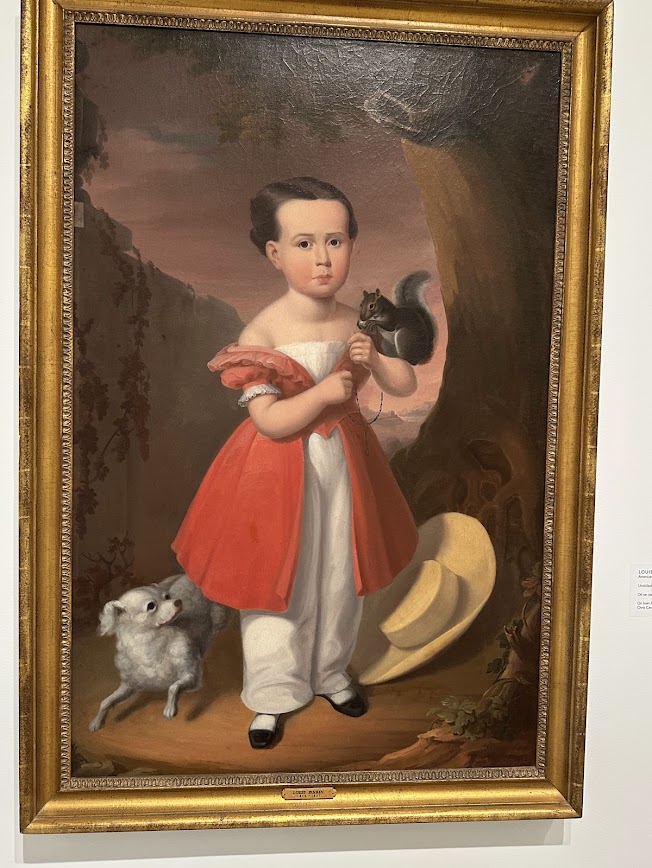
Hudson River Valley School: Jasper Cropsey
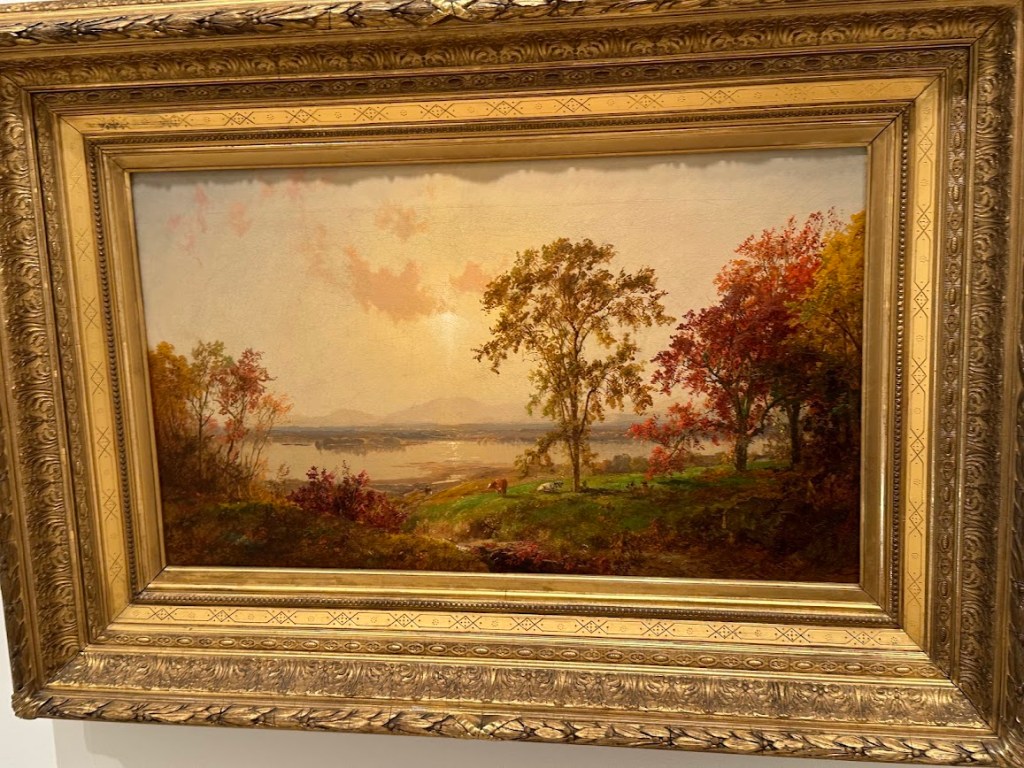
From farmer’s son to celebrated artist, Jasper F. Cropsey (1823-1900) embarked on a unique path. Initially trained as an architect, he later found his calling in landscape painting, a passion nurtured during his European travels where he even occupied Thomas Cole’s former studio. Upon his return to New York, Cropsey’s commitment to capturing the natural world led him to become a distinguished Hudson River School painter, known for exploring nature’s influence on humanity. He was also a founding member of the American Watercolor Society in 1867.
Cropsey’s use of light and mastery of color makes him one of my favorite Hudson River School artists
Henry Oswana Tanner

I’ve always been drawn to his beautiful Biblical scenes and unique style of painting. Henry Ossawa Tanner was an American artist who spent much of his career in France. He became the first African-American painter to gain international acclaim. Tanner moved to Paris, France, in 1891 to study at the Académie Julian and gained acclaim in French artistic circles.
Getting The Gossip…

American Modern Art
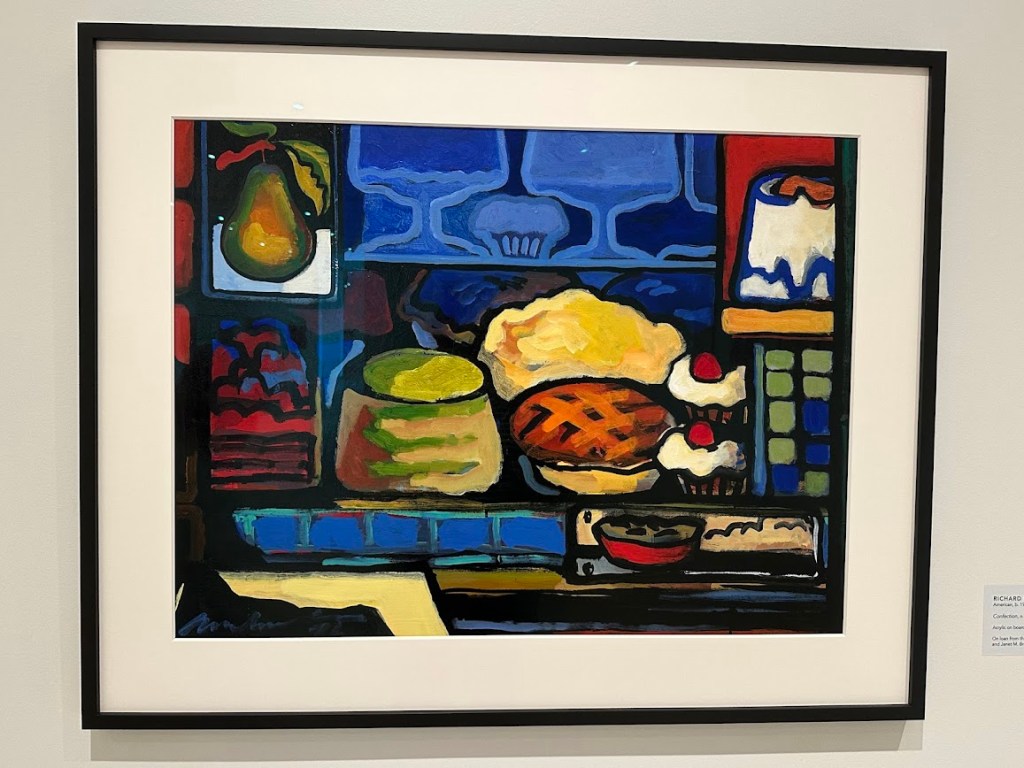
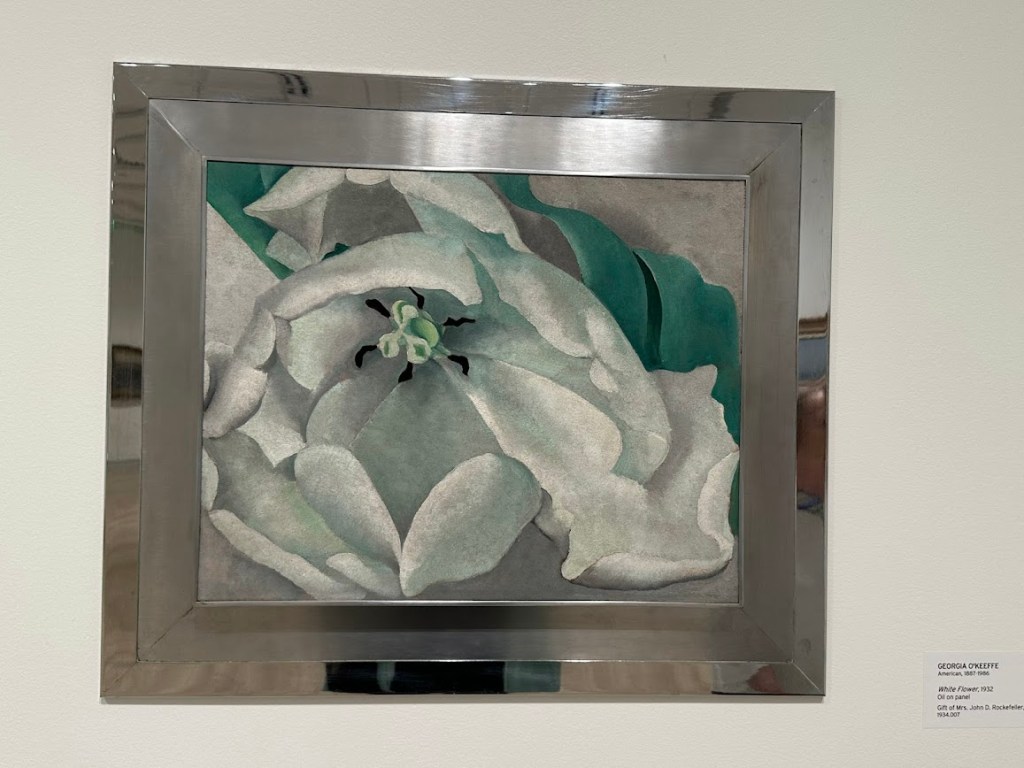
Personally this one of my favorite O’Keeffe flower paintings because it has a calm and ethereal quality that doesn’t say ‘too much’ with unnecessary detail – it just lures you in with the bright whites and cooler undertones.
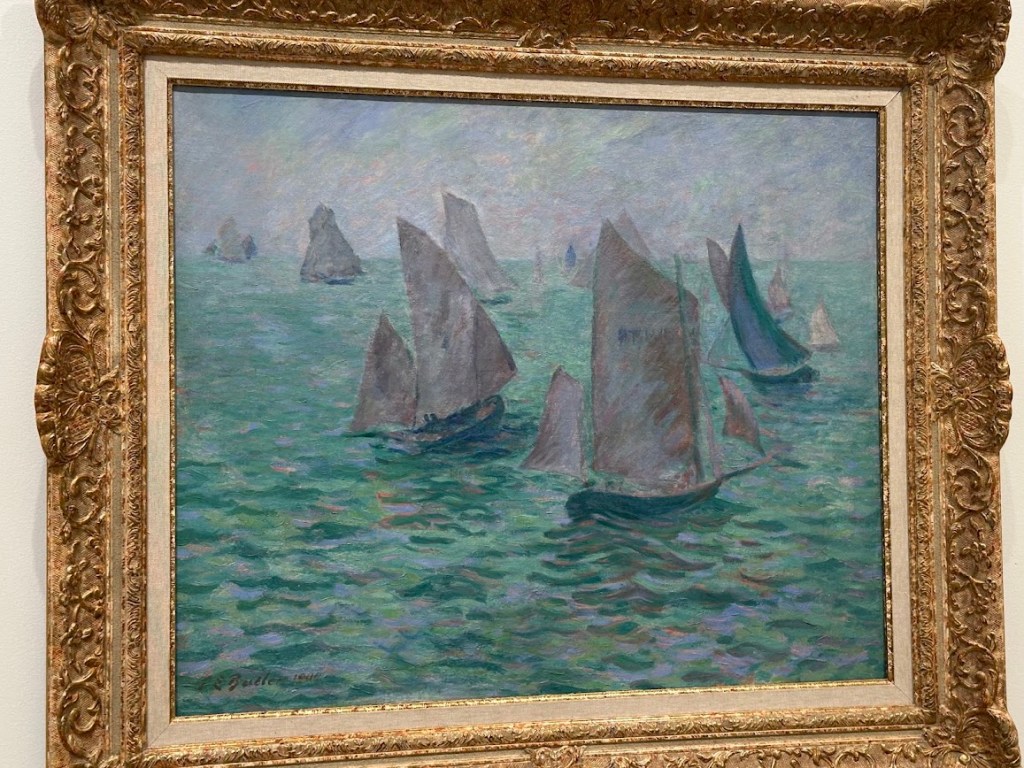
This was one of my favorite pieces at the museum. I’ve long been a fan of American Impressionist Theodore Earl Butler and this beautiful painting with it’s broad colorful brushstrokes feels like a day at the marina. Very calming and you feel the movement of the water.

At first I thought this was a Sisley with the brushwork, but discovered it is by an artist named Clark L. Voorhees, who I wasn’t familiar with prior to this museum expedition.
Voorhees was born just on the cusp of The Impressionist movement on May 29, 1871 in New York City. He initially pursued science, earning degrees from Yale and Columbia, however art was his passion. In 1894, he enrolled in classes at The Art Students League and then enrolled at the Metropolitan School of Fine Art, and also studied with Irving Ramsey Wiles on Long Island, before traveling to Europe. In Europe he studied at the Academie Julian and spent time in the French village of Barbizon, which had once been the center of The Barbizon School of naturalistic painting that led to Impressionism. He eventually settled in Old Lyme CT where he painted many scenes. I look forward to continuing to look for his art in other museums and study this phenomenal painter.
I’ll look forward to featuring additional art and art history from the collection in future posts.
However the best way for you to experience his amazing collection is to make the trip to Williamsburg and see it in person.
Plan your Art Expedition:
Williamsburg has so much to offer, from Colonial Williamsburg to nearby Jamestown and Yorktown, amusement park Busch Gardens to nearby beaches…you can spend a lifetime exploring the region.
I recommend blocking off at least three days for your Williamsburg Adventure so you can spend half a day (or more) at The Muscarelle and also exploring historic William & Mary. I recommend the Historic W&M Walking Tour
You can then spend a full day meandering through Colonial Williamsburg, which transports you back to the Colonial era, where you can tour restored and reconstructed replicas of Williamsburg Colonial Past, attend a session at the Colonial House of Burgesses while debating Independence or catch a performance at one of the area theatres.
Merchant’s Square, which is a stone’s throw from The Muscarelle is one of the most charming downtown retail districts in America. Shop local stores like The Christmas Shop, Williamsburg Peanut Shop, Scottish Store and more. Downtown has tons of great coffee shops and restaurants too. My personal favorites are Aromas and Illy for coffee, Blue Talon, Mellow Museum and Dog Street Pub for dinner.
Where to Stay:
Williamsburg has tons of wonderful hotels. I recommend the following from personal experience:
- Hampton Inn (both locations)
- Colonial Williamsburg Woodlands Family friendly and most packages include Colonial Williamsburg tickets too.
- Country Inn and Suites
For more travel planning tips I recommend:
Colonial Williamsburg – Official Website
American Nomad Traveler – Our Sister Blog : Three Festive Days in Williamsburg – has some helpful Williamsburg Tips
Thanks for joining us on this Art Expedition. Don’t forget to subscribe for our latest posts.
You can also find us on Facebook


[…] Beyond American Nomad, I also share my passion for art history on Art Expeditions, where we travel the world through art, exploring museums and discovering art history. You can find my blog post on The Michelangelo exhibit. Additionally, you can explore my overview of The Muscarelle’s permanent collection and other special exhibitions [here] […]
LikeLike